In shortOsaka frames itself through kuidaore, eating yourself to ruin, and its tourism bureau calls the city the Kitchen of the Nation. The best food in Osaka means takoyaki, okonomiyaki, kushikatsu, kitsune udon, negiyaki, horumon, Koreatown grills and Kuromon's market seafood. Dotonbori, Shinsekai and the 580-metre Kuromon arcade hold most of them, and one 3-hour evening walk covers the big three.
about 150shops in the Kuromon Market arcade
130 mJanjan Yokocho, the Shinsekai kushikatsu alley
8% / 10%tax on takeaway / on eating in
1935year takoyaki was first sold in Osaka
What the kuidaore saying means for your eating plan
Osaka's official food-culture page puts the city inside one proverb: Kyoto ruins itself on clothes, Osaka on food. The same page gives the city its other nickname, the Kitchen of the Nation. In practice that means the signature plates are griddle and fryer food, served fast, often handed to you through a window rather than brought to a table.
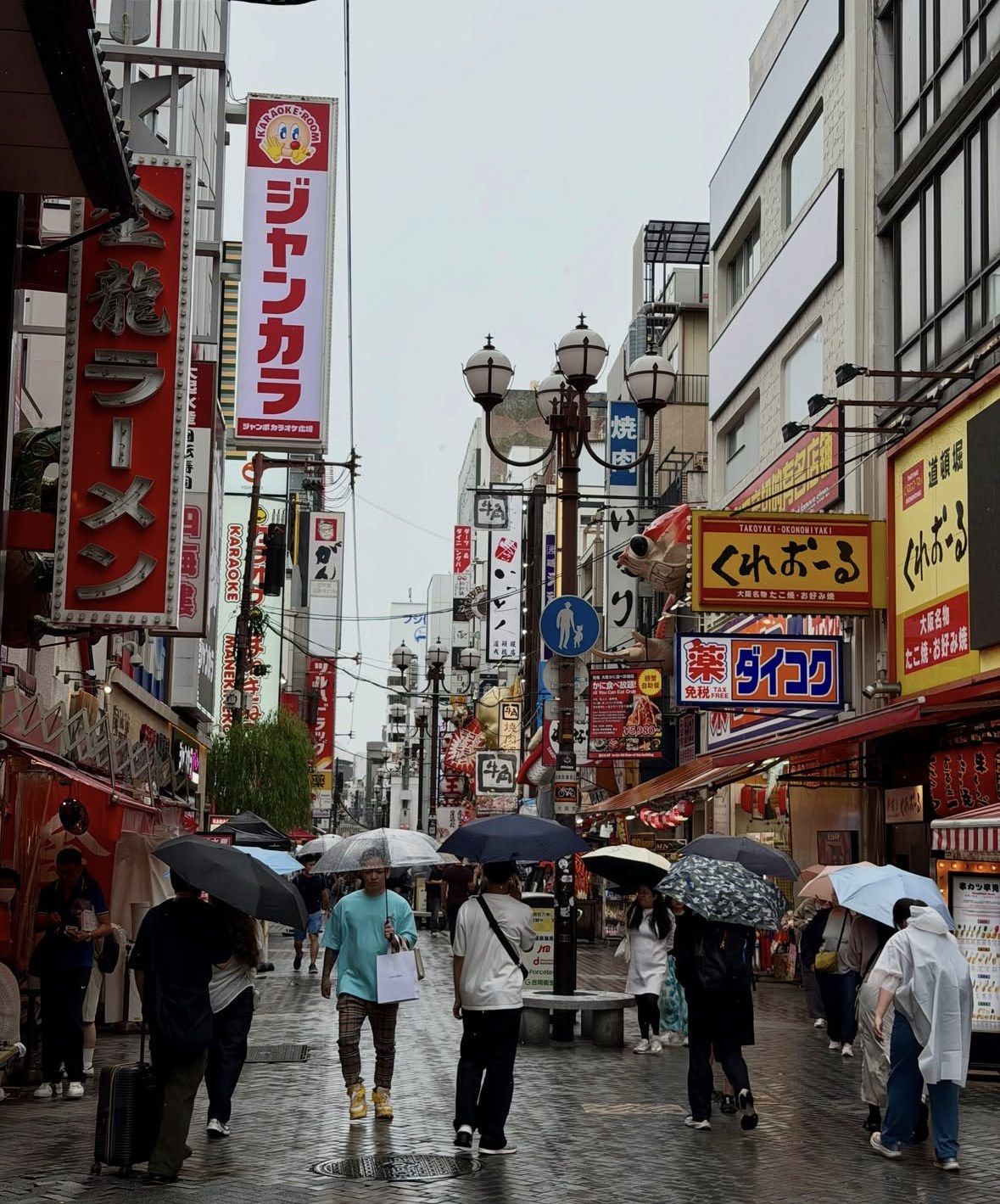
Geography does most of the work in planning. The Minami side, Namba and Dotonbori, is where takoyaki windows and okonomiyaki hot plates cluster, and the food strip there sits 5 to 10 minutes on foot from Namba, Shinsaibashi or Nipponbashi stations. Shinsekai, under Tsutenkaku, is kushikatsu country. Nipponbashi has the Kuromon arcade. For grilled offal and Korean-influenced plates you go east to Tsuruhashi and Ikuno, and for izakaya rooms full of locals, north to Tenma, one stop from Osaka Station on the JR Osaka Loop Line. The Osaka food tours compared on this site work the Minami and Shinsekai part of that map, starting in Shinsekai, in Dotonbori and Namba, and at the Kuromon arcade.
One thing to accept before you build a schedule: neither Dotonbori nor Kuromon has district-wide hours. On the official listings for both, each trader fixes its own opening time and its own closing day, so the stall holding the dish you came for can be shuttered while the one beside it fries all afternoon. A walk with a fixed start time is the one part of a food day that behaves predictably.
What to eat in Osaka: the four dishes everyone comes for
Takoyaki, round batter balls with octopus inside, is cooked in a dimpled iron plate, turned with a pick and handed over in a tray with sauce, mayonnaise, bonito flakes and seaweed. Count it as a modern dish: the shop credited with inventing it started trading in 1933 and its own history dates takoyaki to 1935, while the tourism bureau says the stalls only multiplied across the city in the 1950s. Dotonbori and Kuromon are where you will meet it most often. Wanaka sells portions of 8, 12 or 15 pieces depending on the branch, plus takosen, three balls pressed into a shrimp cracker with sauce and mayonnaise, and its Sennichimae main store at 11-19 Namba-Sennichimae opens 10:30-21:00 on weekdays and 9:30-21:00 at weekends and holidays. Eat it standing, with the pick, and give it a minute: the centre is molten.
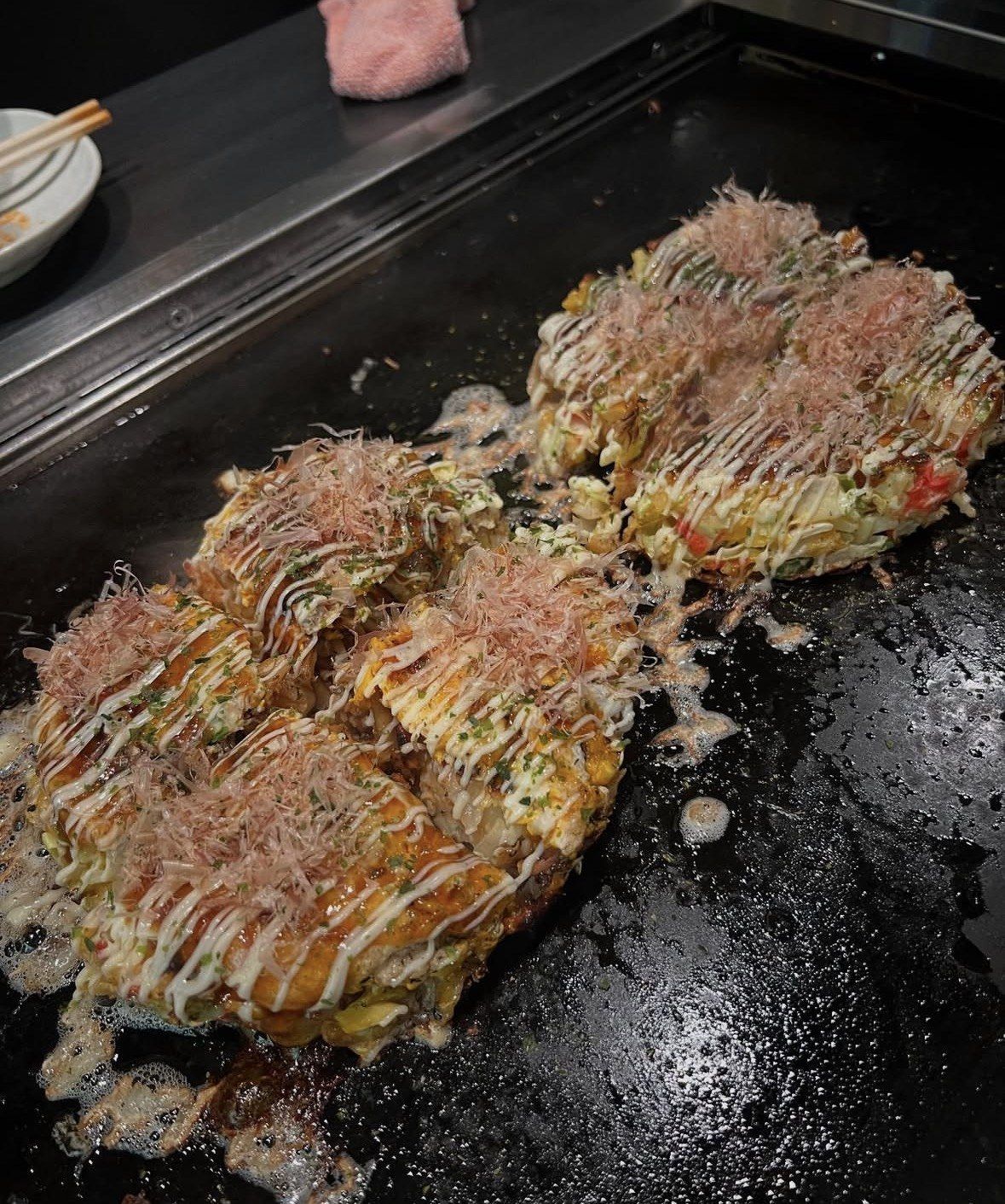
Okonomiyaki, a savoury cabbage pancake, is built the Kansai way here. Wheat flour is dissolved in dashi, cabbage is the non-negotiable ingredient, the mixed batter goes flat and round onto the hot plate and pork is the usual topping. That mixing is the difference from Hiroshima, where the dish is layered up from a thin crepe with cabbage, bean sprouts and green onion steamed on top, then soba noodles, then sauce and nori. Sit at a teppan counter and eat it in wedges with the small spatula. Mizuno at 1-4-15 Dotonbori trades daily, 11:00-22:00 with last orders at 21:00, and says it has been at that address for more than 70 years; Chibo, which dates itself to 1973, runs floors 1 to 6 of its own building at 1-5-5 Dotonbori and a Sennichimae store at 11-27 Namba-Sennichimae.
Kushikatsu is skewered meat and vegetables crumbed and deep-fried, ordered a few sticks at a time at a counter and eaten hot, standing or on a stool. Shinsekai owns it: Janjan Yokocho packs around 50 shops selling kushikatsu and doteyaki, miso-simmered beef sinew, into about 130 metres of covered lane. Hozenji Yokocho, two stone-paved alleys of 80 metres by 3 metres one block off the Dotonbori strip and 5 minutes from Namba Station, has kushikatsu and okonomiyaki shops too, in a far quieter register.
Kitsune udon is the dish to order when you need a break from fried things: thick soft noodles in a pale broth, topped with a sheet of sweet fried tofu. Noodle shops across the centre serve it all day, and it is the cheapest way to understand Osaka's taste for dashi. One caution for plant-based eaters: Osaka udon broth is made with kelp and bonito flakes, so it is not vegetarian.
Famous Osaka food beyond the big three
Negiyaki comes off the same hot plates as okonomiyaki but is thinner, with green onion instead of cabbage doing the heavy work, cut into strips and usually eaten with a lighter, soy-leaning sauce rather than the thick brown stuff. Okonomiyaki counters in Minami are where to ask for it, and it is the better second order if you have already had a pancake that evening.
Horumon is grilled offal, cooked over fire or on a plate at your table and eaten in small pieces with sauce and something cold to drink. It belongs to the working-class east of the city and to izakaya alleys: Tenma's narrow lanes hold hundreds of izakaya, Japanese pubs serving small plates, and the area around Tsuruhashi smokes with it after dark. Order it once you are a round or two into the evening.
Korean-influenced grills count as an Osaka food tradition in their own right. Ikuno Koreatown, on Miyuki-dori, opened as a shopping street of roughly 500 metres in 1993 and now holds more than 100 eateries and shops, in a district where about 30,000 residents are of Korean descent. The station to aim for is Tsuruhashi, where Kintetsu, the Osaka Metro Sennichimae Line and the JR Osaka Loop Line all stop; coming from Momodani on the Loop Line instead puts the grills 10 minutes away on foot. Expect grilled meat, kimchi stalls and street snacks eaten as you move along the street.
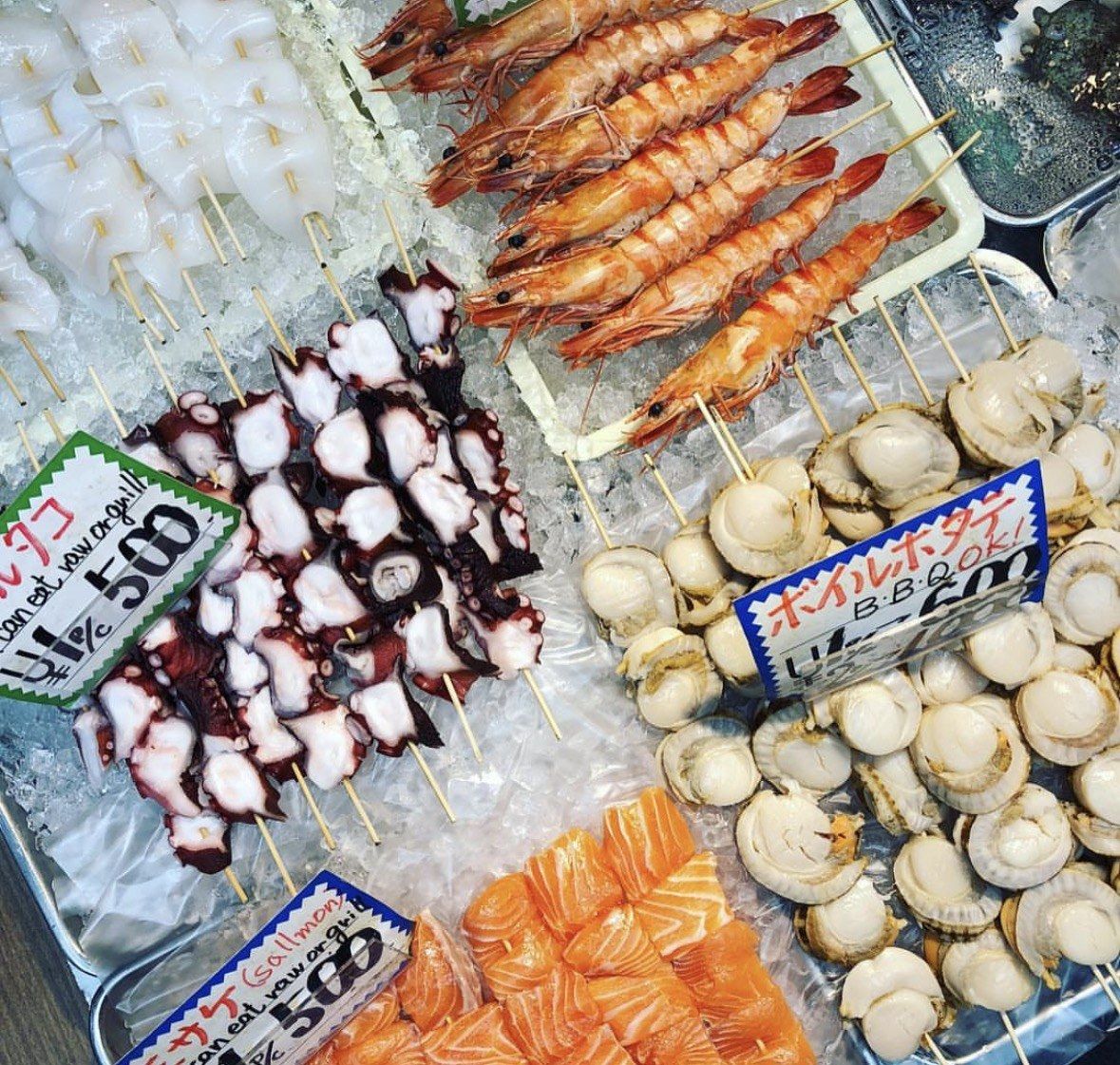
Market seafood is the quiet winner for many visitors. The Kuromon arcade in Nipponbashi runs about 580 metres under one roof with roughly 150 shops, and the Sennichimae Line exit at 2-4-1 Nippombashi puts you straight into it; the market grew out of Edo-period fish trading beside Enmyoji Temple and was officially recognised in 1902. Scallops, crab legs, oysters and tuna get grilled or sliced in front of you, and the arcade has an eat-in corner with sushi, seafood bowls and tempura bowls if you would rather sit. Come in the morning, which is also the tourism bureau's own summer advice: eat under the arcade before the day's heat builds.
Kushikatsu, takoyaki and okonomiyaki in one evening
This 3-hour walk covers Osaka's three signature dishes across both headline districts, with 7 pieces of kushikatsu, takoyaki, a piece of okonomiyaki you help cook and 2 drinks, from $109 and rated 4.8 ★ (1,159).
★ 4.8/5 · 1,159 reviews
Eat-in or takeaway, and two rules that catch people out
Staff at a takoyaki window will ask if you are eating there or taking it away, and your answer sets the tax rate. The reduced 8% applies to food you carry off, while sitting down in the shop's seating area puts the order at 10%, so an identical tray costs you more on the stool. Say takeaway when you do not need a seat, and across a day of grazing it adds up.
Tipping is not customary in Japan, in Osaka restaurants, in taxis or on a food walk. Thanks are spoken, and that is the whole transaction. Guides are not waiting for an envelope.
Street smoking has been banned across the whole of Osaka City since 27 January 2025, except in designated smoking areas, and anyone caught pays a 1,000 yen fine. That covers the Dotonbori strip, the Shinsekai lanes and the Kuromon arcade. Restaurants and cafes may still have separated smoking sections, so use one of those or a marked area. Carry some cash as well: most walks include two or three drinks and anything beyond that is on you.
- Say takeaway unless you want the shop's seat: 8% tax instead of 10%
- No tipping, on walks or in restaurants; say thanks instead
- No street smoking anywhere in the city, 1,000 yen fine, designated areas only
- Kuromon in the morning, Dotonbori and Shinsekai after dark
- Shop hours and closing days are set individually, so check on the day
Which tasting walk covers which dishes
Choose the walk by the dishes it actually serves. If your list is kushikatsu, takoyaki and okonomiyaki, the Dotonbori and Shinsekai foodie walk hits all three in one 3-hour evening: 7 pieces of kushikatsu, a few pieces of takoyaki, a piece of okonomiyaki with a lesson in cooking it on the grill, 2 drinks alcoholic or not, and tour photos afterwards. Three start times are offered, 11:30, 16:30 and 17:30, the group forms at the FamilyMart Sanno Dobutsuen-mae just outside Exit 1 of Dobutsuen-mae Station, and the ¥190 of transport fees between stops sits outside the price.
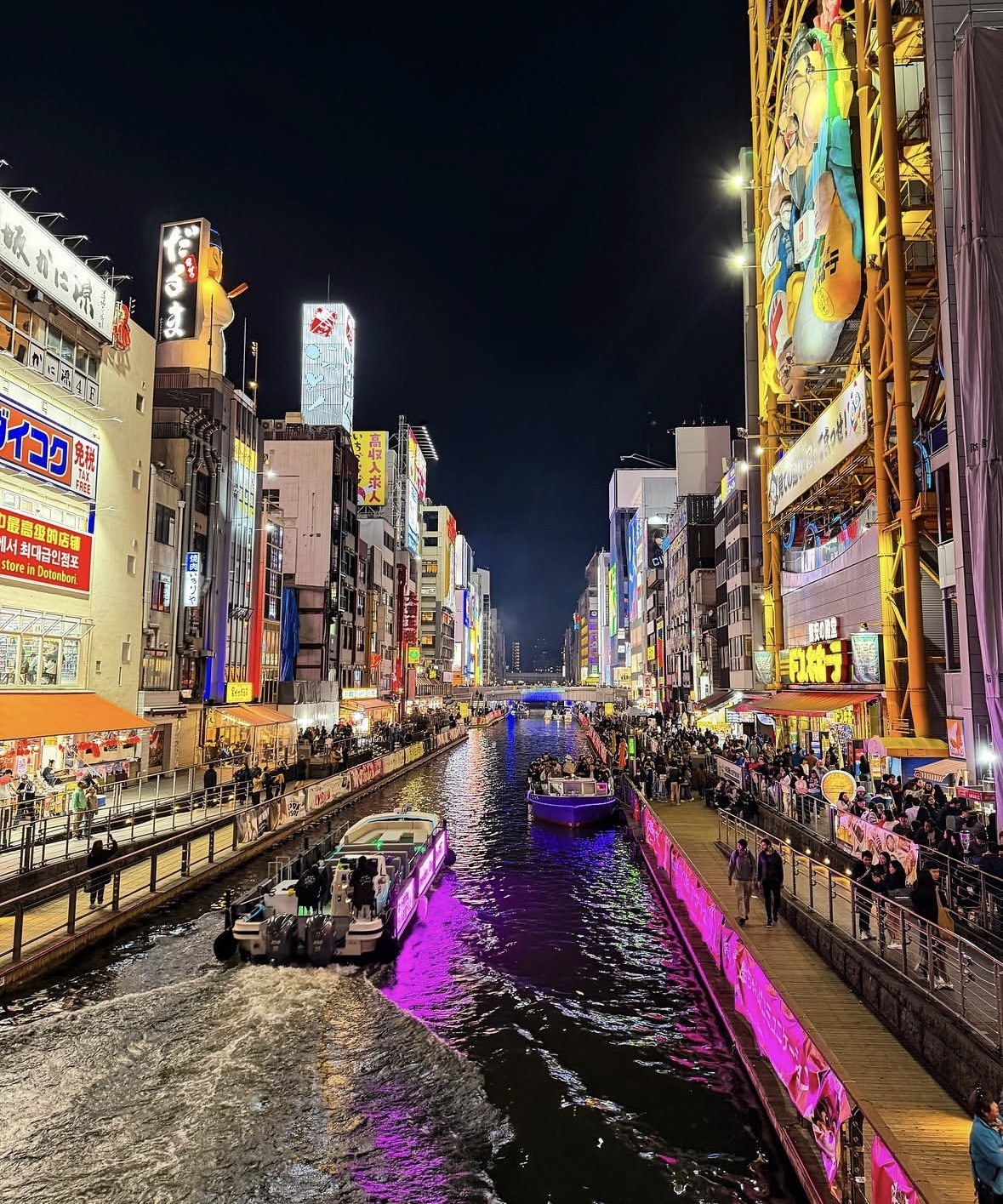
If what you want is volume, the 18 foods and 3 drinks walk at 4 eateries carries the highest tasting count of the walks on this site, from $80 and rated 5.0 ★ (3,950). The 15-dish version spreads a slightly smaller list across 5 eateries with commentary on history and local quirks, from $76 and rated 4.9 ★ (4,150). Both gather in Shinsekai, a minute from Dobutsuen-mae Station, so neither includes the canal views; do Dotonbori on your own feet before or after, since the Glico sign stays lit from sunset until 24:00.
On the 18-foods walk, vegetarian requests, allergies and dislikes can be somewhat accommodated with a reduced number of tastings, and strict gluten-free cannot be handled. Dates, availability and conditions appear on the booking page for each walk.
| Walk | Duration | From | Rating | Dishes and drinks | Districts | Meeting point |
|---|
| Osaka Street Food Tour: 18 Foods & 3 Drinks at 4 Eateries | 3 hours | from $80 | 5.0 ★ (3,950) | 18 local foods, 3 drinks, 4 eateries | Shinsekai | Dobutsuen-mae Exit 5, street level outside MEGA Don Quijote |
|---|
| Osaka Food Tour: 15 Delicious Dishes & 3 drinks at 5 Eateries | 3 hours | from $76 | 4.9 ★ (4,150) | 15 signature dishes, 3 drinks, 5 eateries | Shinsekai | Dobutsuen-mae Exit 1, Daiichi Building with 15 lanterns |
|---|
| Osaka Local Foodie Walking Tour in Dotonbori and Shinsekai | 3 hours | from $109 | 4.8 ★ (1,159) | 7 kushikatsu, takoyaki, okonomiyaki plus cooking lesson, 2 drinks | Dotonbori and Shinsekai | Dobutsuen-mae Exit 1, FamilyMart Sanno Dobutsuen-mae |
|---|
Where to read the detail on each dish and district
Each dish and each district has its own page on this site, with addresses, station exits, opening patterns and the walks that cover them.
- Takoyaki: the shops, the portion sizes and the Akashi-style version served in warm dashi
- Okonomiyaki: the Dotonbori counters, the Kansai mixing method and the hands-on classes
- Kushikatsu: Shinsekai's lanes under Tsutenkaku and how a counter order works
- Kuromon Ichiba Market: the 580-metre arcade, the eat-in corner and the morning timing
- Dotonbori and Namba: the canal strip, Hozenji Yokocho and the lit Glico sign
- Tenma and Tenjinbashisuji: izakaya alleys and Japan's longest shopping street
- Tsuruhashi and Ikuno Koreatown: Miyuki-dori, grilled meat and kimchi stalls
Questions people ask
If I only have one night, which Osaka dish should I prioritise?
Takoyaki from a Dotonbori or Kuromon window, then sit down for okonomiyaki at a teppan counter. Those two cover the city's flour-and-griddle identity in under an hour of eating. Keep kushikatsu for a second evening in Shinsekai, where the lanes are the point as much as the skewers.
Is Osaka okonomiyaki the same as the Hiroshima version?
No. Osaka mixes the batter: wheat flour dissolved in dashi with cabbage as the essential ingredient, spread flat and round on the plate, usually topped with pork. Hiroshima layers instead, starting with a thin crepe, then cabbage, bean sprouts and green onion steamed on top, then soba noodles, then sauce and nori.
Can a vegetarian eat Osaka's famous dishes?
Not the standard versions. The dashi in the batter and the pork on top rule out okonomiyaki as it normally reaches the plate, and kitsune udon arrives in a broth built on kelp and bonito flakes; Japan's national tourism organisation warns that those flakes turn up in dishes with no fish in sight. For a plant-based meal built around the same eating day, Paprika Shokudo Vegan at 1-9-9 Shinmachi, Nishi-ku runs lunch 11:30-15:00 and dinner 17:30-21:30 and shuts on Wednesdays; Green Earth in Honmachi takes last orders at 16:30 inside a Monday to Saturday 11:30-17:00 window; and for the pancake itself there is CHIBO Diversity, Chibo's Muslim- and vegetarian-friendly room on the 7th floor at 1-5-5 Dotonbori. For ingredient questions the Osaka Convention and Tourism Bureau answers on 06-6131-4550, daily 9:00-17:30.
What time of day is best for market seafood?
Morning. The tourism bureau advises reaching Kuromon early in summer and eating under the arcade roof before the heat builds, and market-focused walks start at 10:00 or 11:00 for the same reason. There is no single market-wide opening time to rely on later in the day, since each shop sets its own hours and closing days.
How much cash should I have on me for a food evening?
Enough for extra drinks and anything you add on top of a walk, which typically includes two or three. Tipping is not customary, so that is not a cost. Takeaway orders are taxed at 8% against 10% for eating in the shop's seats, so saying take out trims a little from every window order.
Read also