In shortTakoyaki is batter and tender octopus cooked in a plate of round cast-iron moulds and turned with metal pins until the balls brown. Shops sell them by the tray: Wanaka's portions run to 8, 12 or 15 pieces. Say take away and the tax is 8% rather than 10%. The densest counters sit in Dotonbori, the Kuromon arcade and Shinsekai.
1935year takoyaki was created at Aizuya
8, 12 or 15pieces in a Wanaka portion
8% / 10%tax on takeaway / on eating in
from $71hands-on takoyaki session with sake
Osaka takoyaki street food, from batter to turning pins
The plate is the whole trick. A takoyaki griddle is a slab of cast iron drilled with rows of hemispherical hollows, kept hot enough that the batter sets the moment it lands. The batter itself is thin, a slack flour-and-stock mix closer to cream than to pancake mix, so the cook pours it across the entire plate rather than filling each hollow one by one. A cube of tender octopus goes into every hollow, with chopped spring onion and pickled ginger scattered over the top. One Osaka food tour on this site, the 2-hour sake session at MOMO to SAKE, has you cooking takoyaki yourself with the host's own recipe.
Then come the pins. Two thin metal skewers cut the batter between the moulds, push the overspill back into each hollow and turn each ball a quarter at a time, over and over, until a soft centre is sealed inside a browned shell. Wait for a cook who is still turning: a tray that has sat on the warm edge of the plate loses the contrast between crisp outside and almost liquid middle.
Finishing is done at speed in front of you. A brush of thick brown sauce, a lattice of mayonnaise if you want it, then dried bonito flakes that curl in the steam and a shake of green seaweed powder. Trays come with toothpicks, not chopsticks, and the first ball will burn you, so start with the one at the edge.
Aizuya, 1933, and the dish that came before octopus
Aizuya is the shop credited with the invention. Its first-generation owner, Tomekichi Endo, started trading in Osaka in 1933, and the shop's own history dates takoyaki itself to 1935. Before the octopus there was radioyaki, the same round format filled with konjac and beef, which Aizuya still sells today.
The Osaka Convention and Tourism Bureau treats the dish as a recent arrival and dates the spread of takoyaki shops across the city to the 1950s. Everything you see on the canal strip is younger than the canal by three centuries.
If you want the original address, the Aizuya main store is at 2-3-1 Tamade-nishi, Nishinari-ku, by Exit 1 of Tamade Station on the Osaka Metro Yotsubashi Line. According to the official site it opens 11:00-21:00 and closes only on New Year's Day, which makes it one of the few takoyaki counters in the city with a predictable calendar.
Where to eat takoyaki in Osaka, district by district
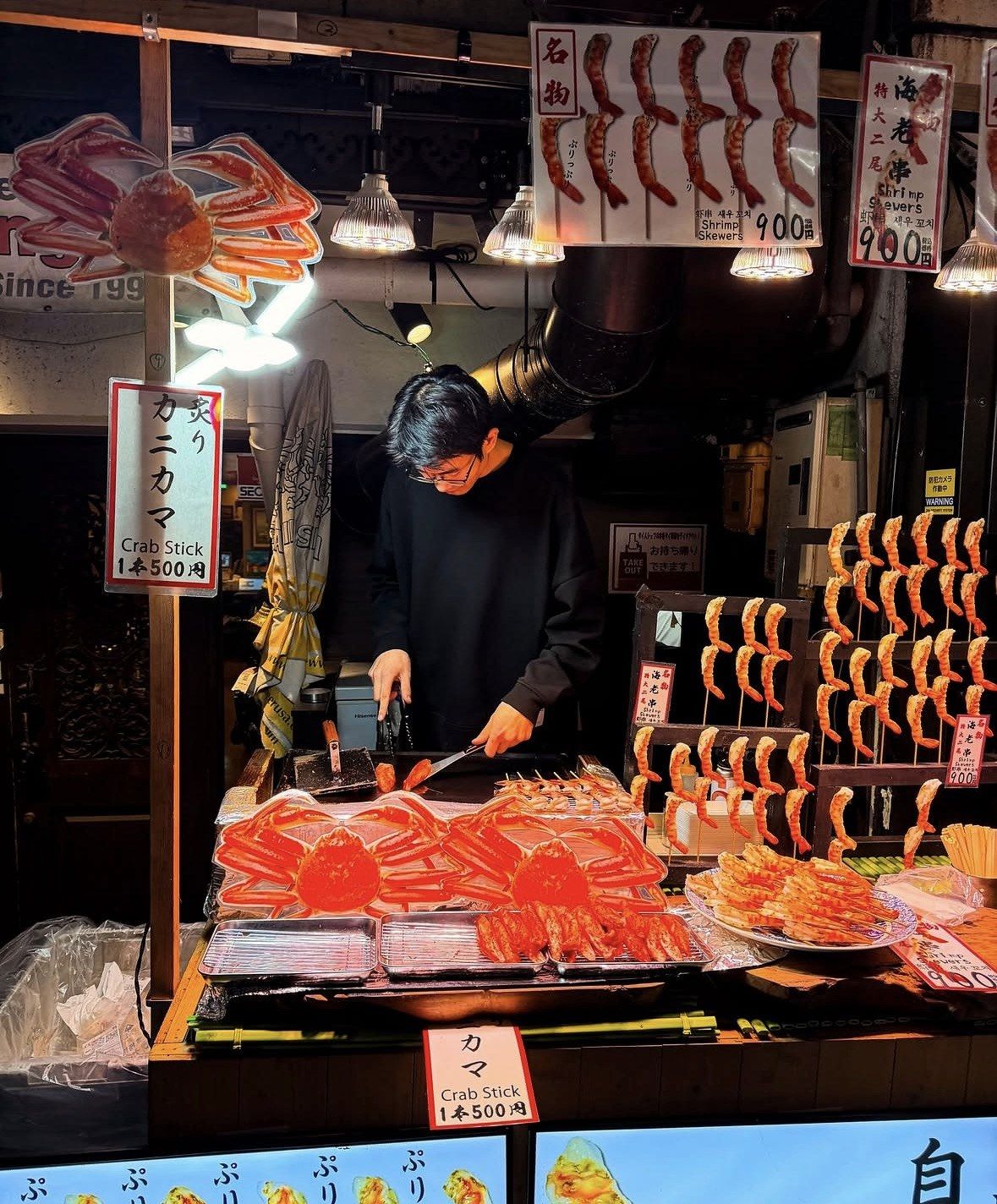
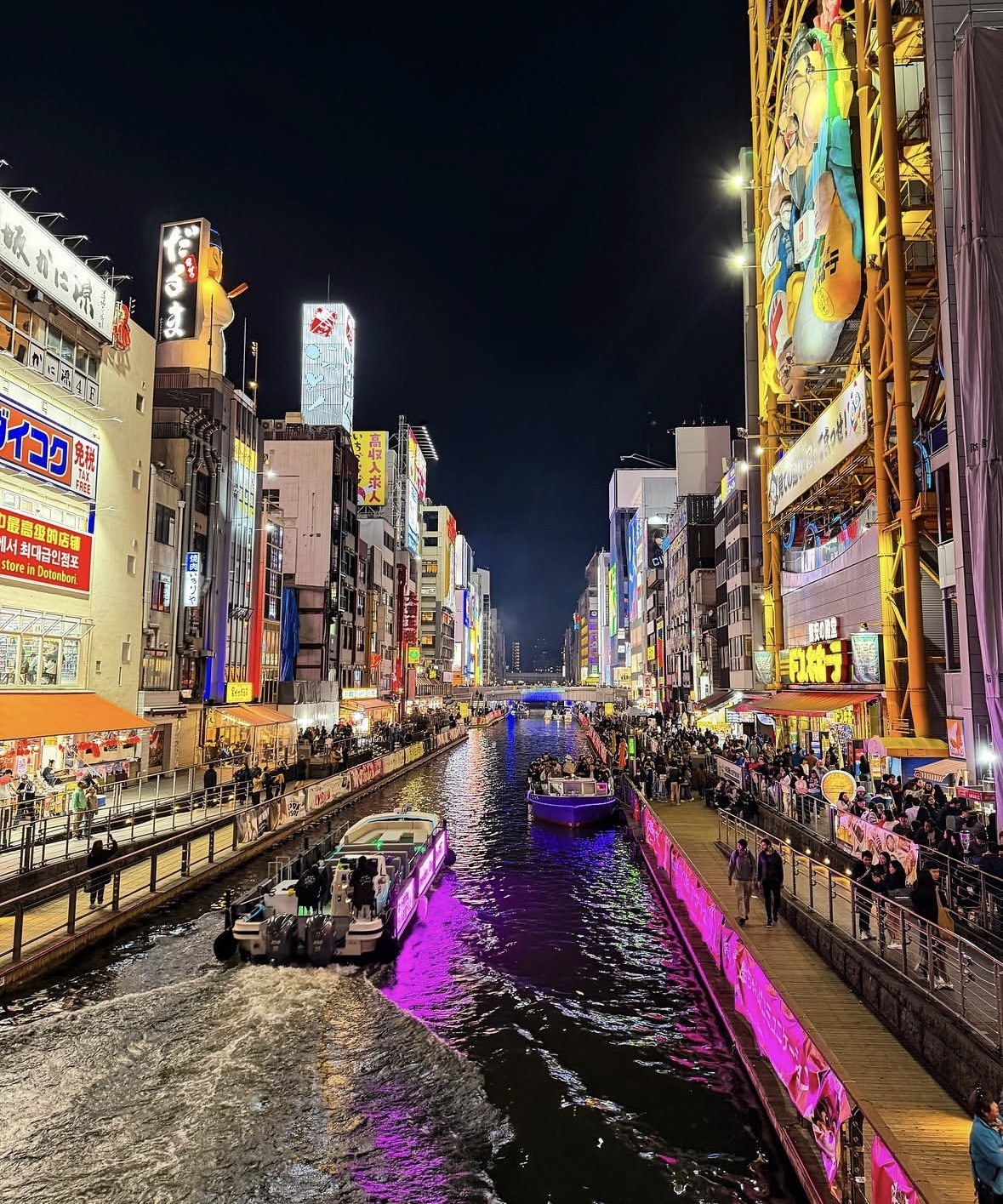
Three shop styles cover most of what you will meet. The Dotonbori strip runs on takeaway windows: you order at the glass, pay, wait beside the plate and carry the tray off, and the counters sit 5 to 10 minutes on foot from Namba, Shinsaibashi or Nipponbashi. Kukuru's Dotonbori main store at 1-10-5 Dotonbori lists takeout from 10:30 to 21:30 on weekdays and from 10:00 to 21:45 at weekends, which is roughly how late the window trade stays lit along the canal.
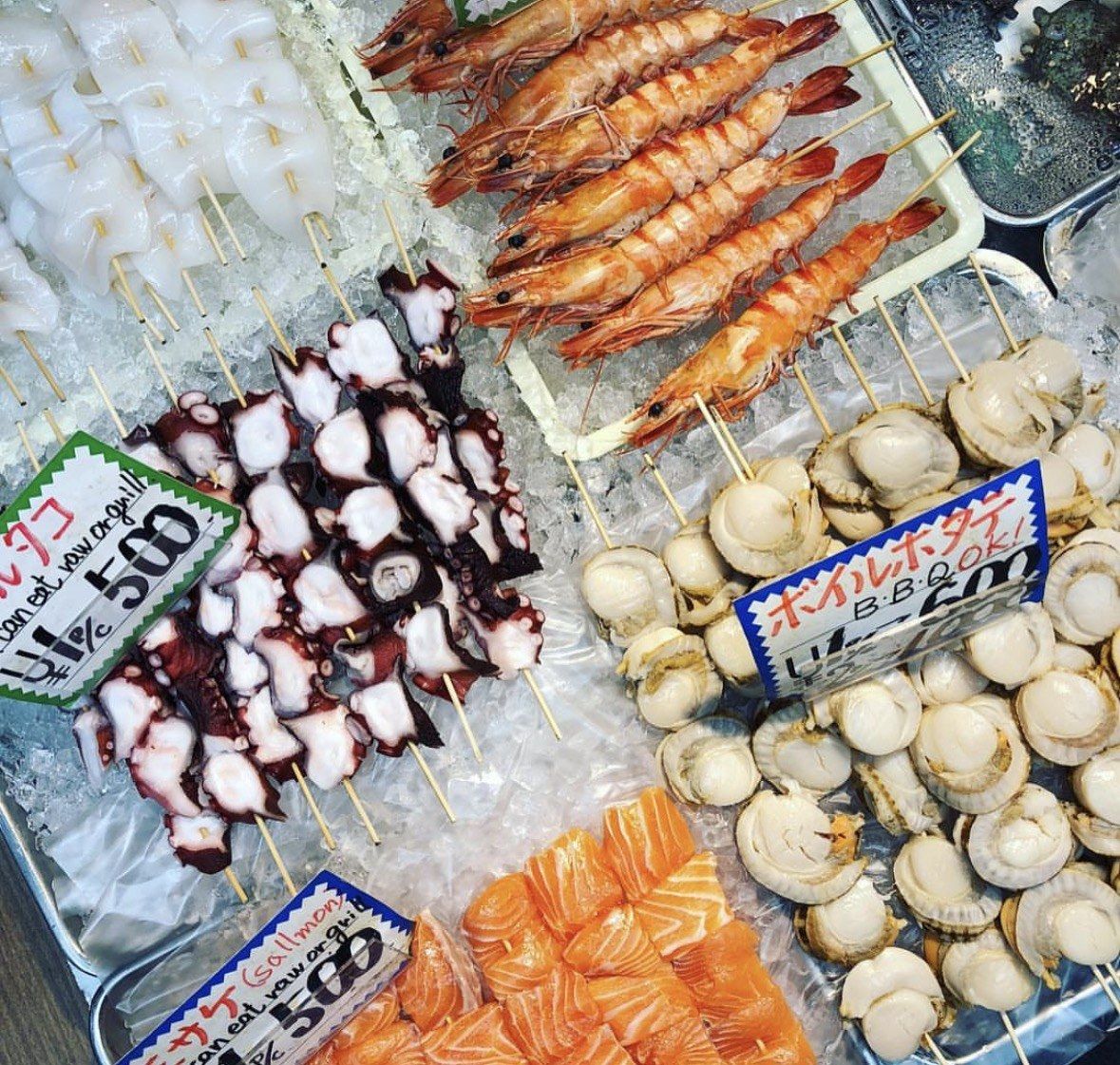
Under the Kuromon Ichiba roof in Nipponbashi the rhythm is different. Roughly 150 shops line about 580 metres of covered arcade at 2-4-1 Nippombashi, Chuo-ku, immediately outside Nippombashi Station on the Sennichimae Line, and the market has its own eat-in corner for sushi, seafood bowls and tempura bowls. Hours and closing days are set shop by shop in the official listing, so if one specific counter is the point of your morning, the Kuromon Market Shopping District Promotion Association answers shop-level questions on 06-6631-0007.
Shinsekai is the third style, and the one most of the walks on this site start from. Its Janjan Yokocho packs about 50 shops into roughly 130 metres of lane, mostly kushikatsu, deep-fried skewers, and doteyaki, beef sinew simmered in miso, which makes it the district where takoyaki arrives as one item in a longer sequence rather than as the main event.
| District | Where exactly | What the counters are like | Hours from the official sites |
|---|
| Dotonbori | Kukuru main store, 1-10-5 Dotonbori; strip is 5-10 min from Namba, Shinsaibashi or Nipponbashi | Takeaway windows on the canal strip, trays handed straight over the counter | Kukuru takeout 10:30-21:30 weekdays, 10:00-21:45 weekends |
|---|
| Namba-Sennichimae | Wanaka main store, 11-19 Namba-Sennichimae, Chuo-ku | Portions of 8, 12 or 15 pieces, plus takosen and Akashi-style wanko-dako | 10:30-21:00 weekdays, 9:30-21:00 weekends and holidays |
|---|
| Kuromon Ichiba, Nipponbashi | 2-4-1 Nippombashi, Chuo-ku, outside Nippombashi Station on the Sennichimae Line | About 150 shops along 580 metres of covered arcade, with an eat-in corner | Set shop by shop; association on 06-6631-0007 |
|---|
| Shinsekai | Janjan Yokocho, from Dobutsuen-mae Station | About 50 shops in roughly 130 metres, kushikatsu and doteyaki stands | Set store by store |
|---|
| Tamade, Nishinari-ku | Aizuya main store, 2-3-1 Tamade-nishi, Exit 1 of Tamade Station, Yotsubashi Line | The shop credited with inventing the dish, radioyaki still on sale | 11:00-21:00, closed only on New Year's Day |
|---|
Portions, takosen and the Akashi-style version
Takoyaki is priced by the tray, and the tray sizes are fixed by the shop. Wanaka serves 8, 12 or 15 pieces, with the sizes on offer differing between its branches, so the smallest box at one store is not the smallest box at the next. For one person grazing across several counters, the smallest available portion is the right call every time.
Two local variations are worth hunting down. Takosen presses three balls into a shrimp cracker with sauce and mayonnaise, eaten like a sandwich with one hand and no toothpick. Wanko-dako is the Akashi-style version, served sitting in warm dashi rather than sauced, and Wanaka pours it only at its Sennichimae main store, its Tako-yakushi store and its Tenjin-yon store.
The Sennichimae main store at 11-19 Namba-Sennichimae, Chuo-ku opens 10:30-21:00 on weekdays and 9:30-21:00 at weekends and on holidays, per the shop's own page, so the dashi version fits a late-morning start as easily as an evening. Hours at individual shops do change, so check on the day.
- Standard tray: sauce, mayonnaise, bonito flakes and green seaweed, eaten with toothpicks
- Takosen: three takoyaki in a shrimp cracker with sauce and mayonnaise
- Wanko-dako: Akashi-style balls in warm dashi, at three Wanaka stores only
- Radioyaki: the pre-octopus original with konjac and beef, still sold at Aizuya
Make your own tray, with sake alongside
Two hours seated at MOMO to SAKE with the ingredients and tools to cook takoyaki yourself, plus 10 or more sakes to choose from, which is the version that works in heat or rain.
★ 5.0/5 · 167 reviews
Ordering at the window: eat in or carry it off
Once your tray is counted out, the cook asks whether it is for here or to go, and your answer sets the tax rate. A tray you carry off is charged at the reduced 8% rate, while the same order at the shop's own seating is charged at 10%. Across a morning of small portions that difference adds up, and saying take away also means you are not occupying a stool you do not need.
The arcades have one point of courtesy, and it concerns where you stand. Buy, step to the side of the shop you bought from and finish there before you move on, because the Kuromon lanes carry delivery trolleys and shoppers as well as visitors. Standing over a hot plate in high summer is its own argument for an early tray: the tourism bureau's summer line is to reach the market in the morning and eat under the arcade roof, and August normals of 29.0C for the monthly mean and 33.7C for the daily maximum are the reason.
- Tax: 8% on a tray taken away, 10% if you use the shop's seating area
- Street smoking has been an offence across the whole of Osaka City since 27 January 2025, with a 1,000 yen fine and designated areas the only exception
- Tipping is not customary in Japan, at counters or on a walk; say thank you instead
- Eat the first ball from the edge of the tray and let the rest cool for a minute
Taste several shops, or cook a tray yourself
For a first visit with one evening to spend, take the walking option. The Osaka Street Food Tour runs 3 hours across 4 local restaurants with 18 Japanese local foods and 3 drinks, alcoholic or not, from $80 and rated 5.0 ★ (3,950 reviews). The group forms at street level outside MEGA Don Quijote Shinsekai at Dobutsuen-mae Exit 5, a one-minute walk from the station, with a FamilyMart next to the entrance; you are asked not to go inside Don Quijote or MARUHAN or upstairs. Flag a vegetarian preference, an allergy or a dislike when you book and the walk can bend somewhat, with the number of tastings dropping as a result; a reader who needs strict gluten-free will also end up with a reduced set rather than the full 18.
The other route is to stand at the plate yourself. Osaka Sake Tasting & Hands-On Takoyaki Cooking is 2 hours on the second floor at MOMO to SAKE, from $71 and rated 5.0 ★ (167 reviews), with the ingredients and tools to make takoyaki, the tray you cook, and 10 or more varieties of Japanese sake to choose from for legal adults only. It is indoors and seated, which is the deciding factor in June, the wettest month in the normals at 185.1 mm, and in an Osaka August.
Pick the walk if you want volume and several counters in one go, and the session if you would rather learn the pin technique and drink properly while you do it. Start times, remaining places and the conditions attached to each are set out on the booking page.
| Option | Duration | From | Rating | What you get | Meeting point |
|---|
| Osaka Street Food Tour: 18 Foods & 3 Drinks at 4 Eateries | 3 hours | from $80 | 5.0 ★ (3,950) | 18 Japanese local foods, 3 drinks alcoholic or not, 4 local restaurants, walking tour with a guide | Dobutsuen-mae Exit 5, street level outside MEGA Don Quijote Shinsekai |
|---|
| Osaka Sake Tasting & Hands-On Takoyaki Cooking | 2 hours | from $71 | 5.0 ★ (167) | Ingredients and tools to make takoyaki, the takoyaki you make, 10+ sake varieties for legal adults | MOMO to SAKE, second floor |
|---|
Questions people ask
Is takoyaki suitable for vegetarians or vegans?
No. The filling is octopus, and the finished tray is usually showered with dried bonito flakes. Japan's national tourism organisation warns vegan travellers that bonito can be present in a dish with no fish visible, so a no-octopus request is not enough. To check what goes into a particular batter or sauce before you order, the Osaka Convention and Tourism Bureau takes dietary questions on 06-6131-4550 between 9:00 and 17:30, every day.
Can children take part in the hands-on takoyaki session?
The cooking part is the same for everyone: you get the ingredients and tools and you make your own takoyaki. The sake selection, 10 or more varieties to choose from, is for legal adults only. Which dates are open, and the conditions attached to them, appear on the booking page.
When is the best time of day to eat takoyaki in the Kuromon arcade?
Early. Osaka's tourism bureau advises reaching Kuromon Market in the morning in summer and eating under the covered arcade before the heat builds, and the market's hours and closing days are set shop by shop rather than market-wide. That is why the guided market walks are timetabled at 10:00 or 11:00 instead of later in the day.
Should my first takoyaki evening be in Dotonbori or Shinsekai?
Do both in one night. The Shinsekai walks on this site start a minute from Dobutsuen-mae Station, which puts the kushikatsu and takoyaki lanes first, and the canal is a short ride away afterwards. Lighting on the Glico sign runs from sunset through to 24:00, so a late tray on the canal strip and the photo underneath both still fit.
Do I tip at a takoyaki counter or at the end of a food walk?
No tip is expected at the window, and none at the end of a walk: the custom does not exist in Japan, in Osaka restaurants or in taxis either. Thanks are spoken rather than paid. Budget any spare cash for extra drinks instead, since most walks include a set number.
Read also