In shortVegetarian food in Osaka is workable, but the obstacle is invisible: okonomiyaki batter is flour dissolved in dashi and pork is the usual topping, and local udon broth runs on kelp and bonito flakes. Name dashi and bonito flakes when you order, use plant-based kitchens such as Paprika Shokudo Vegan or Green Earth, and declare your diet when you book a tasting walk.
11:30-17:00Green Earth hours, Monday to Saturday
from $184private walk built around your diet
from $8018-foods walk, vegetarian partly possible
8 tastingson the private personalised walk
Why vegetarian food in Osaka trips people up
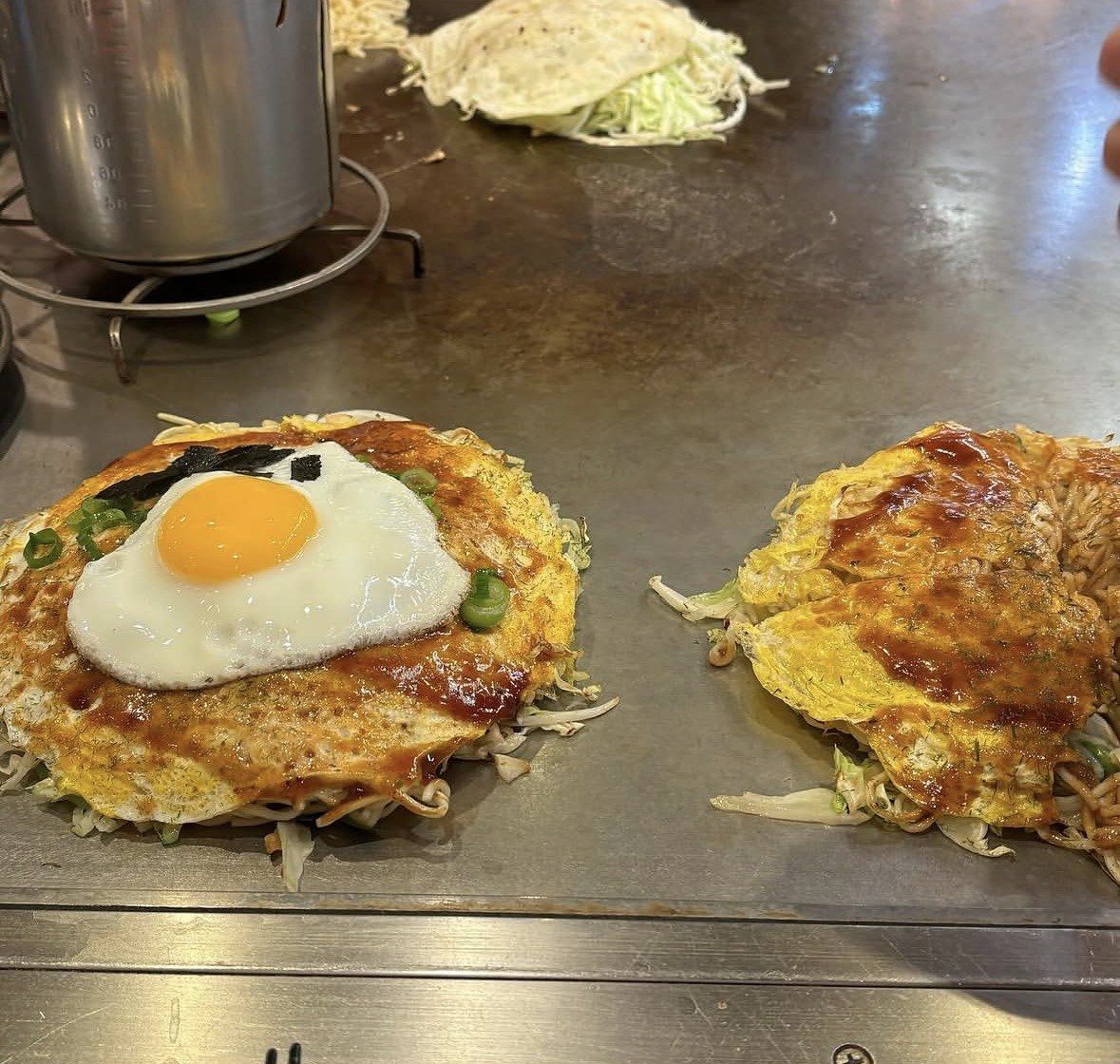
Osaka's signature dishes are built on fish before anything goes on top. Okonomiyaki, the flat cabbage pancake cooked on a hot plate, begins as wheat flour dissolved in dashi, the stock made from kelp and dried fish, and the Osaka method names pork as the popular topping. Udon broth here runs on kelp and bonito flakes. None of that shows on the plate. That matters on any food tour in Osaka: on the Shinsekai to Dotonbori walk, for instance, the vegetarian course still uses pork broth in the kushikatsu.
Japan's national tourism organisation says it plainly: vegan travellers should refuse meats, seafoods and animal products including dashi or stocks, because a dish can hold bonito flakes with no fish anywhere in sight. The working rule is to treat stock as an animal ingredient until a member of staff tells you otherwise, which is what makes the dashi problem for vegetarians in Japan manageable rather than a nasty surprise.
Two smaller traps sit on top of that. Batters and sauces are mixed back in the kitchen, so "no pork" does not cover pork stock, and a kushikatsu counter, where skewers of meat and vegetables are breaded and deep-fried to order, uses one vat of oil for the whole menu. Ask about the fryer before the aubergine skewer.
Plates that usually work, from vegetable skewers to market fruit
Grazing is still the way to eat here; you just change which windows you stop at. Vegetarian street food in Osaka tends to mean single-ingredient items where you can see what went in, plus kitchens that have already done the thinking for you.
Kuromon Ichiba Market helps more than any single restaurant. Roughly 150 shops line about 580 metres of covered arcade at 2-4-1 Nippombashi, Chuo-ku, and for a meat-free plate the useful ones are the fruit, vegetable and pickle stalls rather than the cooked-food counters; the arcade begins at the exits of Nippombashi Station on the Osaka Metro Sennichimae Line. No single timetable covers the place, since the official listing says each shop sets its own hours and closing days, so the stall you had in mind may be shuttered while its neighbour trades. The tourism bureau's summer advice, to come in the morning and eat under the arcade before the heat builds, fits a diet built on fruit and pickles eaten where you buy them. If you need to know whether a particular stall cooks with dashi or shares its fryer, the Kuromon Market Shopping District Promotion Association answers shop-level questions on 06-6631-0007.
- Vegetable skewers at a kushikatsu counter, once you have asked about the oil
- Tofu and aubergine dishes, once the cook confirms no dashi went into them
- Pickles and prepared vegetable dishes from a market stall or a department store food floor, where Hankyu Umeda's B2 carries vegetables, fruit and pickles
- Fruit bought by the piece in the Kuromon arcade, the simplest thing to eat under the roof in August
- Udon ordered with a stock substitution, which only works if the kitchen can make the broth without bonito flakes
- Shojin ryori, the Zen Buddhist cuisine that is traditionally vegan and leaves out garlic and onion, found almost only at temples
- Dedicated plant-based kitchens, where the bureau's vegan pages show versions of okonomiyaki, curry, gyoza, takoyaki, the octopus batter balls, and kushikatsu made without animal ingredients
| Place | Area and access | Opening pattern | What it covers |
|---|
| Paprika Shokudo Vegan | 1-9-9 Shinmachi, Nishi-ku; about 2 minutes from Yotsubashi Station Exit 2, about 5 minutes from Shinsaibashi Station Exit 3 | Two sittings, 11:30-15:00 and 17:30-21:30; no Wednesday service | Vegan menu; its own site says it can also cater for gogun-free, halal and gluten needs |
|---|
| Green Earth | Honmachi area, Chuo-ku | Monday to Saturday 11:30-17:00, last orders 16:30; closed Sundays and public holidays | Vegan restaurant; lunch window only, so plan it around a morning arcade walk |
|---|
| CHIBO Diversity | 7th floor, 1-5-5 Dotonbori, Chuo-ku | Set by the business, so check on the day | Muslim- and vegetarian-friendly okonomiyaki inside the Dotonbori block |
|---|
A tasting walk built around your rules
Three hours, from $184, rated 5.0 ★ (21 reviews), with 8 tastings and a personalisation form after booking, so your no-dashi, no-pork or vegan list is settled before the route is chosen.
★ 5.0/5 · 21 reviews
The wording to use when you ask a kitchen
Hand over a short written list instead of trying a phrase across a noisy counter. Staff can read an ingredient name and answer yes or no, and a written list also survives being passed back to the cook. Keep it to ingredients: the word "vegetarian" is understood differently in different kitchens, while "dashi" is a specific thing a cook can confirm in a second.
The sentences below are the ones that change an answer. Ask about the stock before you ask about the topping, because the stock cannot be removed after cooking.
- No meat and no fish. Does this contain dashi or fish stock?
- Ask whether the broth contains bonito flakes, and whether it can be made with kelp only.
- Is the batter mixed with dashi?
- Is this oil also used for meat and seafood?
- For vegan: does this contain egg, dairy, honey, fish stock or bonito flakes?
- Which dishes on this menu contain no animal ingredients?
Vegan Osaka on a tasting walk needs advance notice
Advance notice is what makes it work. A guide who knows at booking that someone eats no fish stock can pick a different stop, order a different plate or ask a kitchen to hold the bonito before service starts. The same request at 17:30 on the night, in a shop with eight seats and a set tasting, leaves nothing to swap.
On the 3-hour street walk with 18 foods and 3 drinks at 4 eateries, from $80 and rated 5.0 ★ (3,950 reviews), the listing is honest about the limits. Vegetarian requests, allergies and dislikes can be met to a point, and the number of tastings drops as a result. Strict gluten-free sits outside what that walk can do, again with fewer tastings. Put the request on the booking form at the moment you reserve, so the guide has it in hand before the stops are arranged with the shops.
If your rules are firm rather than preferences, the private walk is the better choice. Three hours, from $184, rated 5.0 ★ (21 reviews), with 8 tastings balancing sweet and savoury, an online personalisation form sent after booking and direct contact with your host for the itinerary, so the route is drawn up with your restrictions already on the page. It starts with a pick-up on foot at centrally located Osaka hotels or at a central Starbucks Coffee meeting point, and no vehicle is involved.
For a seated option, the 2.5-hour cooking class in a local instructor's home, from $86 and rated 5.0 ★ (313 reviews), covers an English-speaking instructor, all ingredients and utensils and the lunch or dinner you cook. Kansai batter is mixed with dashi, so raise your diet through the booking page, where dates, availability and conditions are shown.
Halal and allergy requests follow the same rule
Halal eating in Osaka runs into the same hidden-ingredient problem as a vegetarian order, since pork, pork stock and dashi go into batters and sauces back in the kitchen. Paprika Shokudo Vegan states on its own site that it can cater for halal needs alongside gluten and gogun-free requests, and Chibo runs a Muslim- and vegetarian-friendly okonomiyaki restaurant, CHIBO Diversity, on the 7th floor of its building at 1-5-5 Dotonbori, which keeps you inside the main food district instead of crossing town. Shojin ryori is the other reliable framework, traditionally vegan and free of garlic and onion, though it lives at temples rather than on the street.
Allergies get the same treatment with one extra step: name the allergen in writing and accept that a tasting count may drop. Shared fryers, soy sauce in dressings and stock in batters are where reactions come from in Osaka, and none of them appear on a window display. For a specific batter or sauce you can check before you travel by calling the Osaka Convention and Tourism Bureau's call centre on 06-6131-4550, staffed every day from 9:00 to 17:30.
Questions people ask
Is okonomiyaki vegetarian in Osaka?
Not as it is normally made. The Kansai method dissolves wheat flour in dashi, so fish stock is inside the batter, and pork is the popular topping. Cabbage is the essential ingredient, which is why the dish looks vegetarian on the griddle. For a version made to a dietary rule, use a kitchen that states it caters for vegetarian or Muslim guests.
Can I eat udon as a vegetarian?
Only with a substitution. Osaka udon broth is made with kelp and bonito flakes, so the noodles are the easy part and the soup is the problem. Ask whether the broth can be made with kelp alone, in writing if the counter is busy. Where the answer is no, order something that is seasoned rather than simmered.
Does vegan takoyaki exist in Osaka?
The tourism bureau's own vegan pages show plant-based versions of takoyaki, the octopus batter balls, plus okonomiyaki, curry, gyoza and kushikatsu, and point visitors to listing services for addresses. These are made at dedicated kitchens rather than at the street windows along the main strips, so treat them as a planned stop.
Can a food tour in Osaka be fully gluten-free?
No. The 18-foods walk states plainly that gluten-free cannot be fully accommodated and that tastings will be reduced if it is requested. With a strict medical restriction, the private walk with its personalisation form is the format that lets you agree the stops with the host beforehand.
What happens if I only mention my diet on the day?
Expect fewer plates and no substitutions. Tasting sequences are arranged with the shops ahead of the start time, and a counter with a set order cannot rebuild a dish without the stock at short notice. Put the request on the booking form instead; conditions and availability are shown on the booking page.
Read also