In shortKushikatsu in Osaka means skewers of meat, vegetables or cheese in panko crumbs, deep-fried to order at a counter and dipped once, and once only, in a pot of thin sauce shared by everyone sitting there. The home ground is Shinsekai, where Janjan Yokocho runs about 130 metres with around 50 shops below Tsutenkaku Tower: observatory 9:00-21:45, last admission 21:15, adults 1,500 yen.
130 mlength of Janjan Yokocho, the kushikatsu alley
about 50shops along Janjan Yokocho
7 piecesof kushikatsu on the Dotonbori and Shinsekai walk
8% / 10%tax on takeaway / on eating in
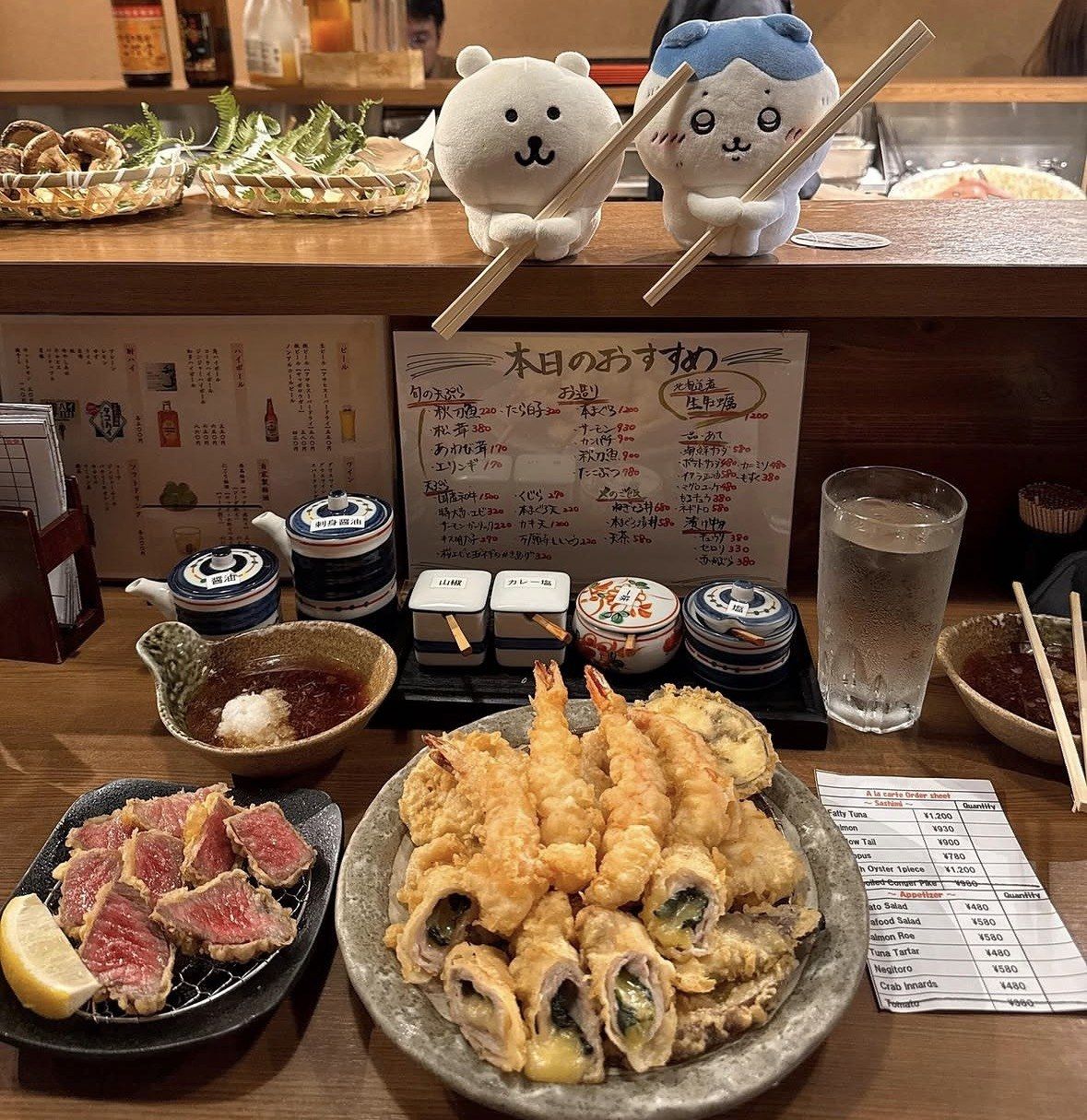
How a round of skewers works at the counter
Kushikatsu, deep-fried skewers of meat and vegetables, arrives in small numbers and keeps arriving. You sit at a counter facing the fryer, the cook works a few metres away, and plates land in front of you one or two skewers at a time on paper that soaks up the oil. Order four or five to begin with, eat them while they are still too hot to be comfortable, then call the next round once you know what you liked. Nobody is waiting for one long order at the start. The used sticks go in the cup beside you and that is how the bill gets counted, so leave them where the staff can see them. On one Osaka food tour listed on this site, the Shinsekai to Dotonbori walk, 7 pieces of kushikatsu are included at a stop in Janjan Yokocho.
The sauce sits in a stainless pot on the counter, shared with everyone else sitting at it. A skewer goes in once, before the first bite, and does not go back. Cabbage leaves are set down in front of you; use one as a scoop if you want more sauce. Most shops post the rule on the wall or on a laminated card in English, and the staff will stop you if you forget.
The menu runs from cheap to rich down the same list. Onion, lotus root, asparagus, shiitake, sweet potato, quail egg and chikuwa fish cake sit at one end; pork, chicken, beef and cheese at the other, with shrimp and octopus in between. Most counters also keep a pot of doteyaki, beef sinew simmered in miso, which is not fried at all and is worth ordering early while you wait.
- Order four or five skewers, then another round when they are gone
- One dip per skewer, in the pot shared by the whole counter
- Use a cabbage leaf as a scoop instead of a second dip
- Start with vegetables, finish with beef or cheese
- Keep the used sticks in the cup provided: that is the tally
Janjan Yokocho and the streets under the tower
Shinsekai is laid out in straight avenues radiating from the tower, and the skewer trade concentrates in one covered lane. Janjan Yokocho runs roughly 130 metres and holds about 50 businesses: fryer counters with doteyaki pots going alongside, shogi parlours, standing bars that have not been redecorated in decades. The lane is narrow enough that you pass single file behind people eating, and the fryers sit close to the walkway, so you can see what a shop is actually turning out before you take a seat. Look at the pots and the queue, then decide.
Above head height the district is signboards: pufferfish, bulls, octopus and chefs' faces built in three dimensions, bolted to the facades and stacked two or three high on one building. Tsutenkaku stands where the main avenues cross, which keeps orientation simple. See the tower, and Dobutsuen-mae Station is a straight walk away.
One tax detail shapes what you pay. Food carried out of the shop is charged the reduced 8% consumption tax, while the same order eaten at the shop's own seats is charged 10%, and staff will ask which you want. At a kushikatsu counter you are sitting down with a cup for the sticks in front of you, so budget for the seated rate on everything you order.
Tsutenkaku Tower hours, admission and timed entry
The tower's official site puts the general observatory at 9:00-21:45, with last admission at 21:15; the outdoor special observatory takes its last entry at 21:35. Admission to the general observatory is 1,500 yen for adults aged 15 and over and 800 yen for children aged 5 to 14. Those are the published figures, and they are worth a re-check on the morning of the day you intend to go up.
Tickets carry a timed-entry reservation, and the official site asks you to pick a slot when you buy. It also recommends buying online in advance and warns that evening slots sell out. Take the warning seriously if the view after dark is why you came to Shinsekai: choose the slot first and build the eating around it.
Timing one evening is straightforward. Because the 16:30 and 17:30 tasting walks move on from Shinsekai towards Dotonbori, go up the tower before the walk rather than after it. An evening that only begins at 18:00, such as the backstreet nightlife walk, runs too close to last admission to be worth rushing, so put the tower on another day.
Seven kushikatsu and a turn at the griddle
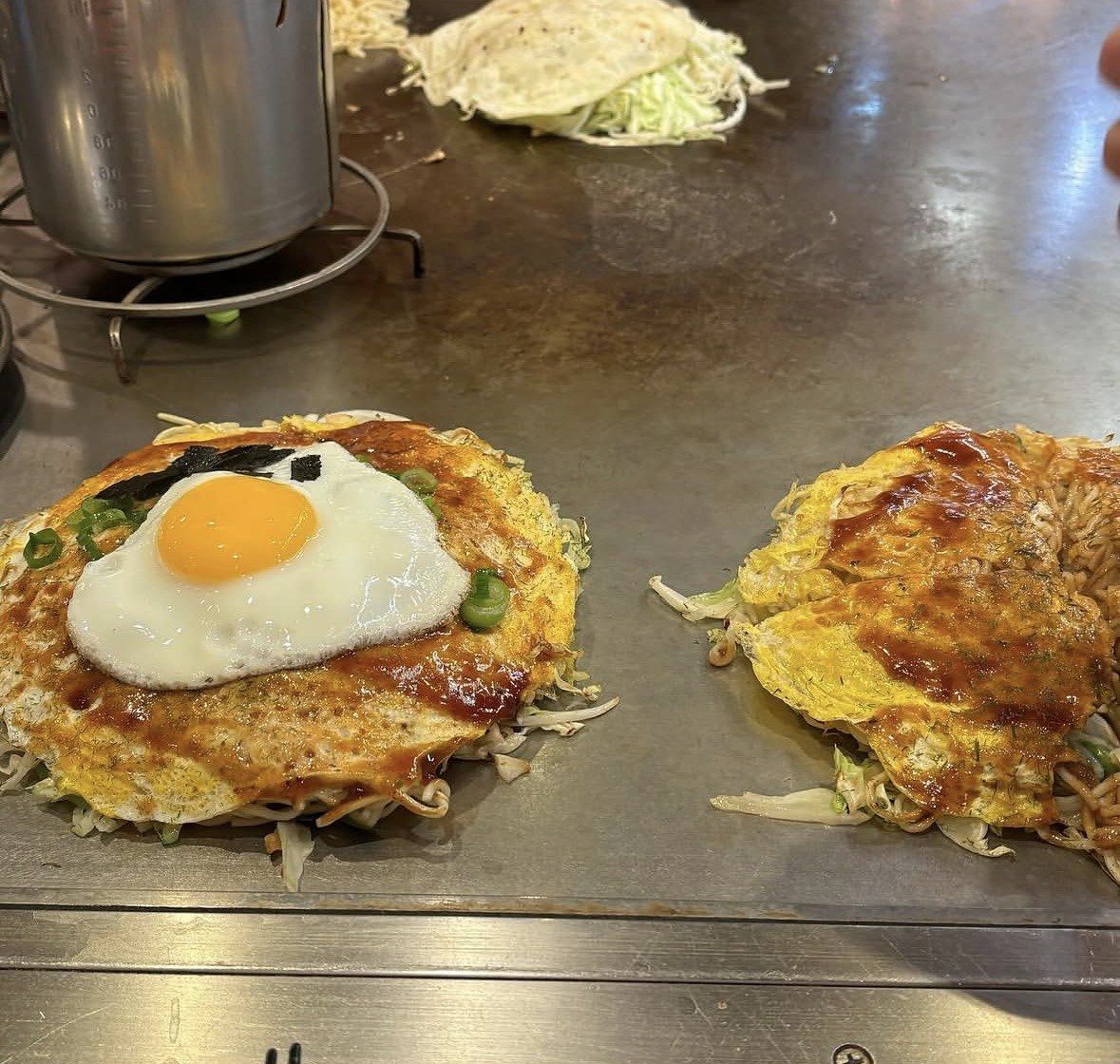
A 3-hour walk that spells out the skewers: 7 pieces of kushikatsu, a few takoyaki and a piece of okonomiyaki you help cook on the plate, from $109, meeting at Dobutsuen-mae Exit 1.
★ 4.8/5 · 1,159 reviews
Pairing the tower with a Shinsekai tasting walk
What a guide buys you in Shinsekai is the doorway. The counters are small, the menus handwritten, the sauce etiquette enforced, and the shops that fry best often have the plainest frontage. A tasting walk takes the seats, orders the rounds and tells you what that particular counter is known for, so your three hours go on eating rather than on working out where to sit.
For skewers specifically, the Dotonbori and Shinsekai foodie walk is the one that names quantities: 7 pieces of kushikatsu, a few pieces of takoyaki (octopus balls in batter) and one piece of okonomiyaki (savoury cabbage pancake) that you help cook on the iron plate, plus 2 drinks alcoholic or not and tour photos afterwards. Three hours, from $109, 4.8 ★ (1,159 reviews), and the start time you choose decides whether the skewers come before dark or after it: 11:30, 16:30 or 17:30. The group forms outside Exit 1 of Dobutsuen-mae Station, in front of the FamilyMart Sanno Dobutsuen-mae, and ¥190 of transport between the two districts is paid separately.
If the number of things tasted matters more, the 18-foods walk covers more dishes in the same three hours: 18 Japanese local foods and 3 drinks across 4 local restaurants, from $80, rated 5.0 ★ (3,950 reviews). It starts on the pavement at Dobutsuen-mae Exit 5, a minute from the ticket gates, at ground level below the MEGA Don Quijote Shinsekai sign, with a FamilyMart beside the entrance; the instructions are explicit about staying out of Don Quijote and MARUHAN and not climbing to any upper floor. Which starts are open on your date, and the conditions attached to them, appear on the booking page.
| Tour | Duration | From | Rating | What you eat and drink | Meeting point |
|---|
| Osaka Local Foodie Walking Tour in Dotonbori and Shinsekai | 3 hours | from $109 | 4.8 ★ (1,159) | 7 kushikatsu, a few takoyaki, 1 okonomiyaki with a cooking lesson, 2 drinks, tour photos | Dobutsuen-mae Exit 1, FamilyMart Sanno Dobutsuen-mae |
|---|
| Osaka Street Food Tour: 18 Foods & 3 Drinks at 4 Eateries | 3 hours | from $80 | 5.0 ★ (3,950) | 18 Japanese local foods, 3 drinks alcoholic or not, 4 local restaurants | Dobutsuen-mae Exit 5, street level outside MEGA Don Quijote Shinsekai |
|---|
| Osaka Backstreet Nightlife & Street Food Walking Tour | 3 hours | from $107 | 4.9 ★ (1,154) | Izakaya dinner, Japanese pub small plates, alcoholic drinks, hidden bar introductions | Outside Izakaya Bonkuraya, gathering in the car park just before 18:00 |
|---|
Two rules first-timers get wrong at the counter
Smoking on the pavement outside a fryer counts as an offence here. The city-wide ban on street smoking took effect on 27 January 2025 and covers all of Osaka City, anyone caught outside a designated smoking area pays 1,000 yen, and waiting for a counter seat in Janjan Yokocho is no exception. Indoors the rule is looser: restaurants and cafes are still allowed separated smoking sections.
Tipping forms no part of the transaction. Nothing gets added at a kushikatsu counter and nothing is handed to a guide at the end of a walk; thanks are said out loud instead. Walks include a set number of drinks, so carry cash if you plan to keep drinking once those run out.
Questions people ask
Can I eat kushikatsu as a vegetarian or with a gluten allergy?
Individual counters fry vegetable skewers, but the batter is wheat and the fryer is shared, so cross-contact is normal. On the 18-foods walk, vegetarian requests, allergies and dislikes can be accommodated somewhat, with the number of tastings dropping as a result, while strict gluten-free cannot be fully accommodated and again means a reduced set. To ask about one shop's batter or its sauce pot before you sit down, the Osaka Convention and Tourism Bureau takes calls on 06-6131-4550 between 9:00 and 17:30, every day.
Does Tsutenkaku admission change over New Year?
Yes. The official site lists the general-observatory rate rising to 1,800 yen for adults and 900 yen for children from 30 December 2026 to 3 January 2027. If your trip falls inside that window, budget the higher figure and take the timed slot early, since the holidays are when evening entries go first.
How do I reach Shinsekai and the skewer lane?
Dobutsuen-mae Station is the stop. Exit 1 brings you out by the FamilyMart Sanno Dobutsuen-mae, where the Dotonbori and Shinsekai walk forms up; Exit 5 puts you at street level outside MEGA Don Quijote Shinsekai, a one-minute walk, where the 18-foods walk meets. Both exits are within sight of the tower, so the district is hard to get wrong once you are above ground.
What time of day suits a kushikatsu counter best?
Evening, when the counters fill and the signboards are lit. The Dotonbori and Shinsekai walk runs 16:30 or 17:30 starts for that, and an 11:30 start if you would rather be finished before dark. In high summer the later slots are the comfortable ones: Osaka's normal August daily maximum is 33.7C and the monthly mean is 29.0C.
Are there kushikatsu counters outside Shinsekai?
Yes. Hozenji Yokocho, one block off the Dotonbori strip and five minutes on foot from Namba Station, has kushikatsu shops among the kappo restaurants and bars along its two stone-paved lanes. Shinsekai is where the dish is densest, with Janjan Yokocho's roughly 130 metres and about 50 shops gathered under the tower.
Read also