In shortSake in Osaka is poured by the glass or from a small tokkuri carafe, served chilled at 8-15C, at room temperature 15-25C or warmed to 40-50C. Labels fall into eight designated grades: ginjo means rice polished to 60% or less, daiginjo 50% or less, and junmai is rice, rice koji and water with no added brewer's alcohol. Tipping is not customary.
10+sakes to choose from at the tasting
40-50°Cusual temperature for warmed sake
15breweries in the Osaka sake brewers' association
from $712-hour sake tasting with takoyaki cooking
How sake in Osaka is served, warm or chilled
Temperature is the first decision at the counter. The Japan Sake and Shochu Makers Association sets out three serving bands: chilled at 8-15C, room temperature at 15-25C, and warmed at 40-50C. Those three bands cover most of the choice in practice, and a shop that will pour the same bottle both ways is the best place to learn what warming does to it.
Formats vary by the kind of place you walk into. A standing counter will often give you a glass sitting inside a wooden masu box, filled until it overflows into the box. A seated izakaya, a small eating and drinking shop, is more likely to bring a tokkuri, the little ceramic carafe, with one or two ochoko, the thimble-sized cups, so a group can pour for each other rather than for themselves. When you compare Osaka food tours that include drinks, the session at MOMO to SAKE in Namba is the one built around sake, with more than 10 to choose from and a sake sommelier pouring.
Order warm when the food is fried or heavily sauced and you are sitting down in winter, when Osaka's normal daily minimum in January is 3.0C. Switch to the chilled band in August: at a monthly mean of 29.0C, with a normal daily maximum of 33.7C, a warmed carafe stops being drinkable long before you finish it. At a tasting you can run through both bands in one sitting, which is the fastest way to work out what you want to drink for the rest of the trip.
Reading a sake label before you order
Two numbers do most of the work. Seimai buai is the share of the rice grain left after polishing, so 60% means 40% of each grain was polished away before brewing. The grade name on the front of the bottle is tied to that figure under Japan's labelling rules, which is why a daiginjo and a honjozo can sit side by side at very different prices.
The rules recognise eight specially designated labels. Learn four of them and you can read almost any list in the city.
Other words printed on the same label tell you how the sake was handled after brewing rather than how the rice was cut. Genshu is bottled undiluted and therefore higher in alcohol, namazake is never pasteurised, nama-chozo-shu and namazume are pasteurised at only one stage, and nigori is coarsely pressed and comes out cloudy. If you want the unfiltered, cloudy style, ask for nigori by name rather than pointing at a grade.
- The eight designated labels: junmai, tokubetsu junmai, junmai ginjo, junmai daiginjo, ginjo, daiginjo, honjozo, tokubetsu honjozo
- junmai on the label means no brewer's alcohol was added
- ginjo and daiginjo tell you how far the rice was polished, nothing about sweetness
- genshu drinks stronger because nothing was added to bring the alcohol down
- nigori is the cloudy one, and it stands up to sauce better than a delicate daiginjo
| Label term | What the labelling rules require |
|---|
| junmai | Rice, rice koji and water only, no added brewer's alcohol; no polishing ratio specified |
|---|
| ginjo | Rice polished to 60% or less |
|---|
| daiginjo | Rice polished to 50% or less |
|---|
| honjozo | Rice polished to 70% or less, with a small amount of brewer's alcohol |
|---|
| tokubetsu honjozo | 60% or less, or a special production method |
|---|
Kansai sake breweries in the prefectures around Osaka
Osaka drinks from the whole of Kansai, and the biggest brewing districts sit a short ride outside the city. Nada Gogo, in Hyogo, is the closest of the famous ones and is made up of five go: Nishigo, Mikage-go, Uozaki-go, Nishinomiya-go and Imazu-go. In Kyoto, the Fushimi Sake Brewers Association lists about 22 member entries including one cooperative, so roughly 21 individual breweries. Those names fill the bottle lists you will be shown at a counter in Namba or Shinsekai.
Osaka Prefecture brews too. Its sake brewers' association was set up in 1953 and currently has 15 member breweries, most of them out in the southern cities rather than in the centre. Naniwa Shuzo in Hannan City, founded in 1716, is described as the prefecture's oldest. Isaka Brewery in Kishiwada dates to 1818 and closes on Wednesdays. Kitashoji Sake Brewery, founded in 1921 at 3173 Hineno in Izumisano City, opens 8:00-17:00 on weekdays and 10:00-16:00 at weekends and on holidays. Yamano Sake Brewery in Katano has been in business since the end of the Edo period.
No official source confirms a working brewery inside Osaka City proper, and the prefecture's 15 member houses are not published by name. That matters for planning: treat a brewery visit as a half-day trip out of the centre, and do your actual drinking and comparing in town. Ring ahead on the day if a specific brewery is the reason for the trip, because the smaller houses run on their own calendars.
What to drink with skewers, griddle pancakes and market seafood
Kushikatsu, deep-fried skewers of meat and vegetables, is the easiest pairing in the city. Shinsekai's Janjan Yokocho runs about 130 metres with around 50 kushikatsu and doteyaki shops, and the batter, the oil and the sweet sauce all want something with body rather than perfume. A junmai at room temperature, in the 15-25C band, or the same bottle warmed, cuts through a run of eight skewers better than a chilled daiginjo does.
What you are pairing with okonomiyaki, the Kansai griddle pancake, is a mixed batter rather than a layered build: wheat flour dissolved in dashi, cabbage as the essential ingredient, spread flat and round on the hot plate, with pork as the popular topping. The dashi in the batter and the sauce on top are both savoury and strong, so a cloudy nigori or a honjozo holds its ground. Save the daiginjo for the next course.
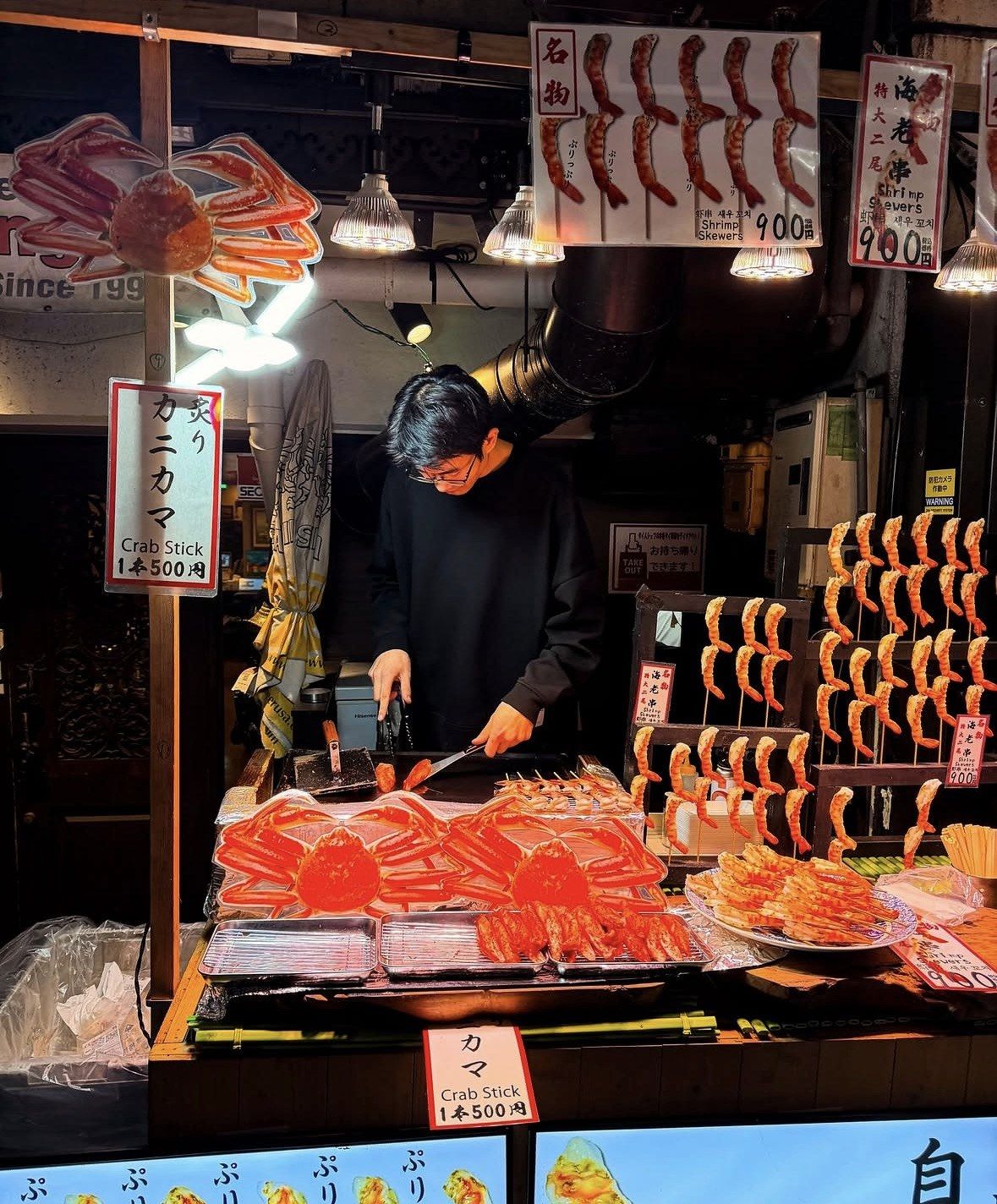
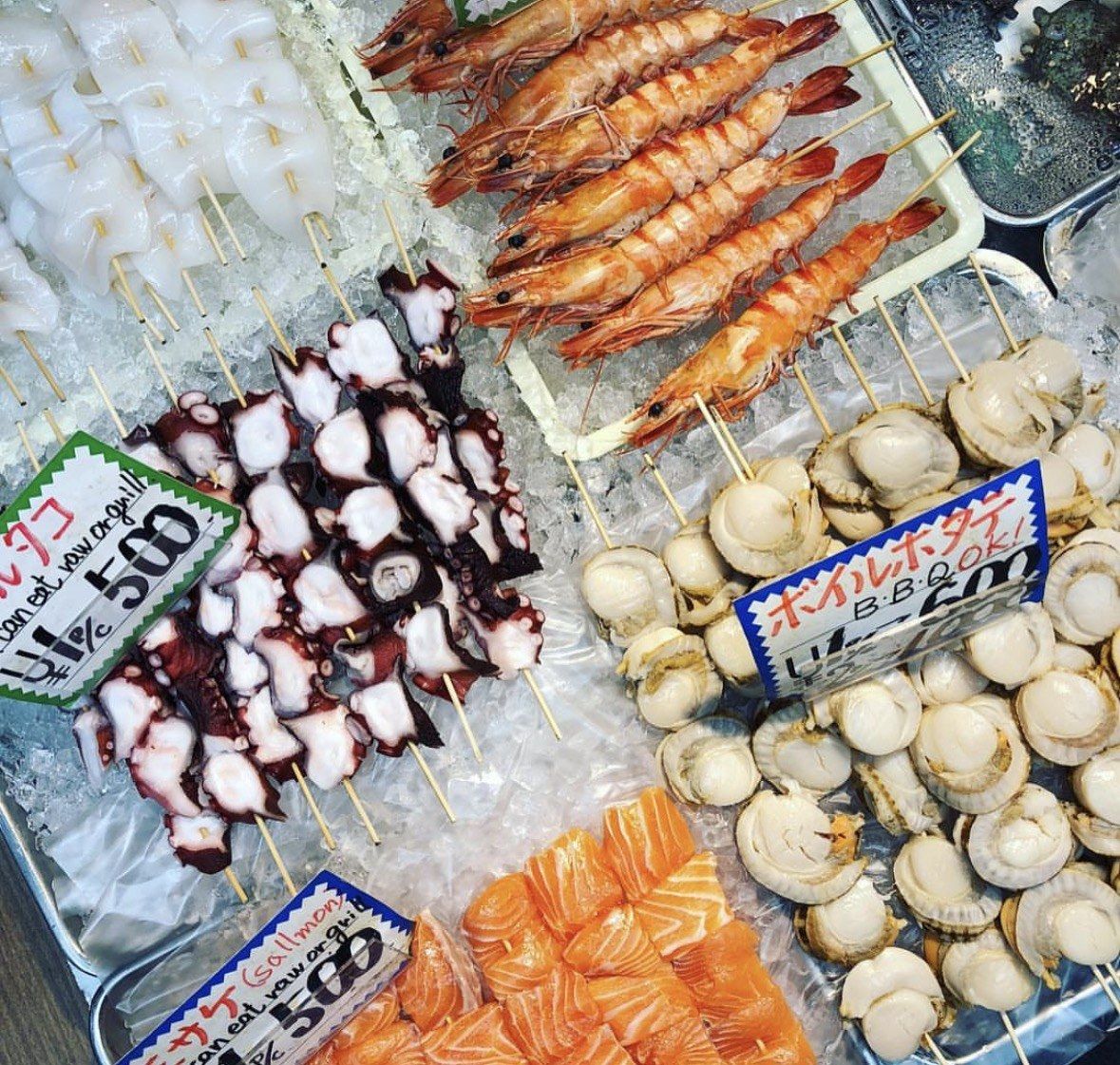
Market seafood pulls the other way. Kuromon Ichiba Market is one 580-metre covered arcade with roughly 150 shops in Nipponbashi, with an eat-in corner serving sushi, seafood bowls and tempura bowls, and the counters slice raw fish and grill shellfish in front of you. That food wants the chilled 8-15C band: a ginjo or junmai ginjo, poured cold, with the fish still warm from the grill.
- Fried skewers and doteyaki: junmai or honjozo, room temperature or warmed to 40-50C
- Okonomiyaki with sauce and pork: nigori or honjozo, poured at room temperature
- Raw cuts, uni and grilled shellfish from the arcade: ginjo or junmai ginjo, chilled at 8-15C
- Takoyaki straight off the moulded plate: anything chilled, because the filling is scalding
Sake tasting with a takoyaki session, 2 hours
Ten or more sakes to choose from and a griddle in the same room, seated and indoors, so you can test chilled against warmed on food you cooked a minute earlier.
★ 5.0/5 · 167 reviews
What a guided tasting looks like next to a cooking stop
The seated format is the efficient one if drinking is the point of your evening. The Osaka Sake Tasting & Hands-On Takoyaki Cooking session runs 2 hours from $71 and is rated 5.0 ★ (167 reviews). The bottles are the reason to pick it: 10 or more varieties of Japanese sake to choose from, open to legal adults only, with the tools and ingredients for takoyaki and the takoyaki you turn out yourself alongside them. It takes place on the second floor at MOMO to SAKE, so search that store name in your map app rather than a street address.
Having the griddle and the glasses in the same room is what makes the pairing legible. You turn octopus batter balls in a moulded plate, they come out at scalding temperature, and you have ten or more bottles in front of you to test against them instead of guessing at a counter where the list is in Japanese. An indoor seat also matters at two points in the year: June tops the rainfall normals at 185.1 mm, and August brings a normal daily maximum of 33.7C, and neither suits a slow comparison of warmed against chilled.
Drinking across several venues instead is a different evening. The Osaka Backstreet Nightlife & Street Food Walking Tour runs 3 hours from $107, rated 4.9 ★ (1,154 reviews), with alcoholic drinks and an izakaya dinner. The Osaka Dotonbori Food & Local Izakaya Bar Crawl Tour runs 3 hours from $104, rated 4.9 ★ (432 reviews), with food and drinks at 3 venues and help ordering at each one. On either walk you drink what the venue pours. To compare the grades side by side, book the 2-hour seated session; dates, availability and conditions are shown on the booking page.
Shochu, highballs and the tipping question
Not everyone at the table wants rice wine. Shochu, a distilled Japanese spirit, is on almost every izakaya list and is usually ordered with hot water, cold water or on ice, which makes it easier to pace over a long meal than sake at full strength. The highball, whisky lengthened with soda, is the other default order in Osaka and is the standard thing to hold while kushikatsu arrives. Both are ordered the same way as sake and neither needs any vocabulary beyond the name.
Non-drinkers are not stranded either. The two evening walks above include drinks that can be taken as soft options, and at the seated tasting the takoyaki session is the part of the booking that does not depend on alcohol, since the sake selection is for legal adults only.
Nobody at the counter expects a tip, and that holds across Japan: food tours, Osaka restaurants and taxis included. You thank the person who poured for you out loud and that is the whole transaction. Nobody will chase you down the stairs with change, so pick up your coins and leave the counter clear.
Questions people ask
Is there a sake brewery inside Osaka City?
No official source confirms one still operating inside the city boundary. The Osaka Prefecture Sake Brewers Association, set up in 1953, has 15 member breweries, but they are not published by name and the ones with public addresses sit out in cities such as Hannan, Kishiwada, Izumisano and Katano. For brewery buildings, plan a trip out of the centre.
What is the difference between junmai and honjozo?
Junmai is made only from rice, rice koji and water, with no brewer's alcohol added and no polishing ratio specified in the rules. Honjozo uses rice polished to 70% or less plus a small amount of brewer's alcohol, and tokubetsu honjozo requires 60% or less or a special production method. Both work with fried food, and texture is what most drinkers pick up on first.
Can someone under the legal drinking age join a sake tasting?
The sake selection at the seated session is stated as being for legal adults only. The cooking half of the booking, with the tools, ingredients and the takoyaki you make, is not alcohol-dependent. If you are travelling with a mixed-age group, check the conditions on the booking page before you pick a date.
Which month is worst for a sake session outdoors?
Two of them. August runs a monthly mean of 29.0C with a normal daily maximum of 33.7C, and June leads the rainfall normals at 185.1 mm, sitting inside a Kinki rainy season that normally starts around 6 June and ends around 19 July. In those slots, take the seated indoor tasting over three hours standing in the street.
Do I need to know the Japanese temperature names to order?
No. Saying cold or warm is enough, and the makers' association itself works in three bands: 8-15C chilled, 15-25C room temperature and 40-50C warmed. The individual Japanese names for each few degrees are widely repeated online but are not given on the association page, so do not worry about memorising them.
Read also