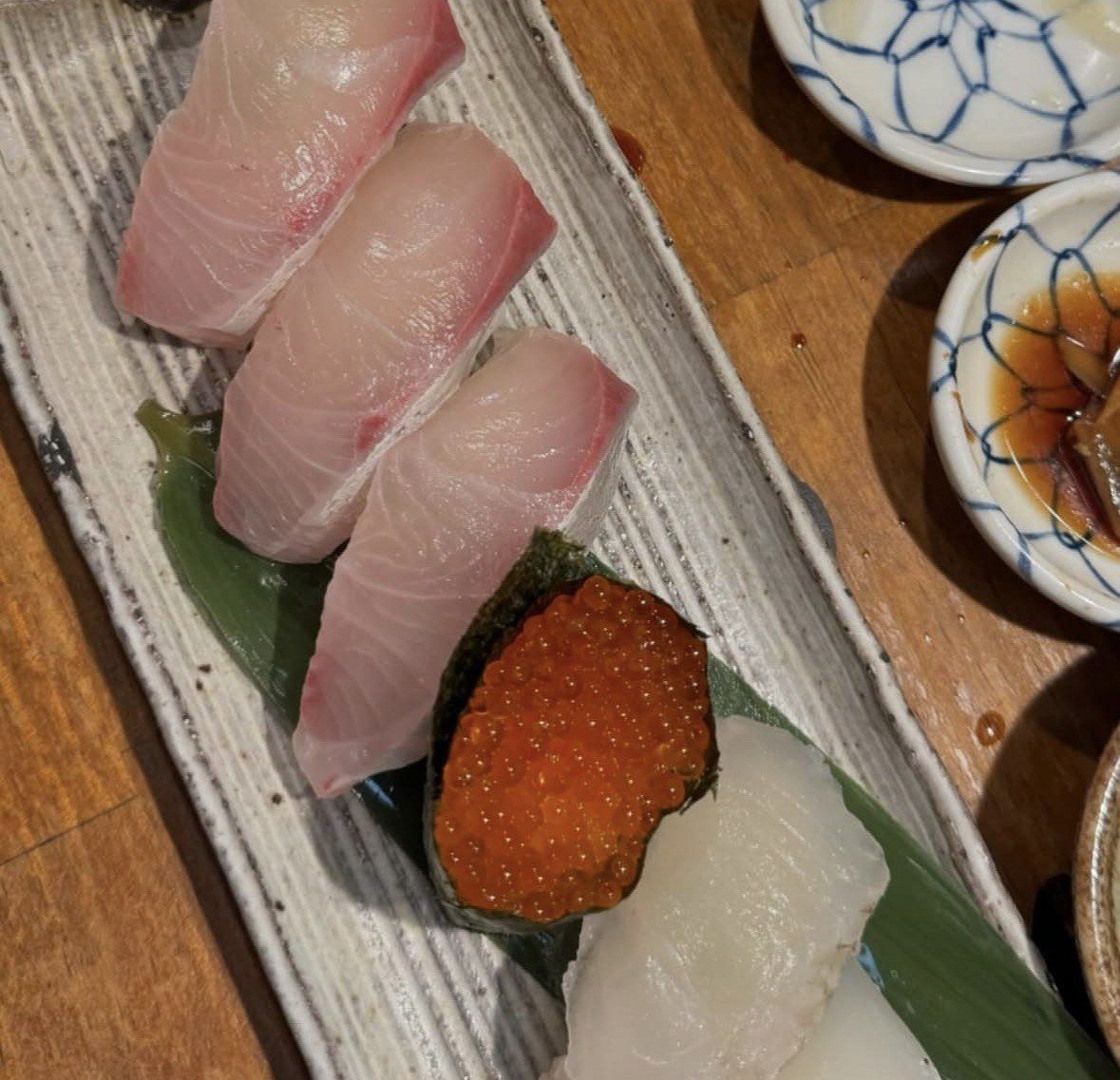
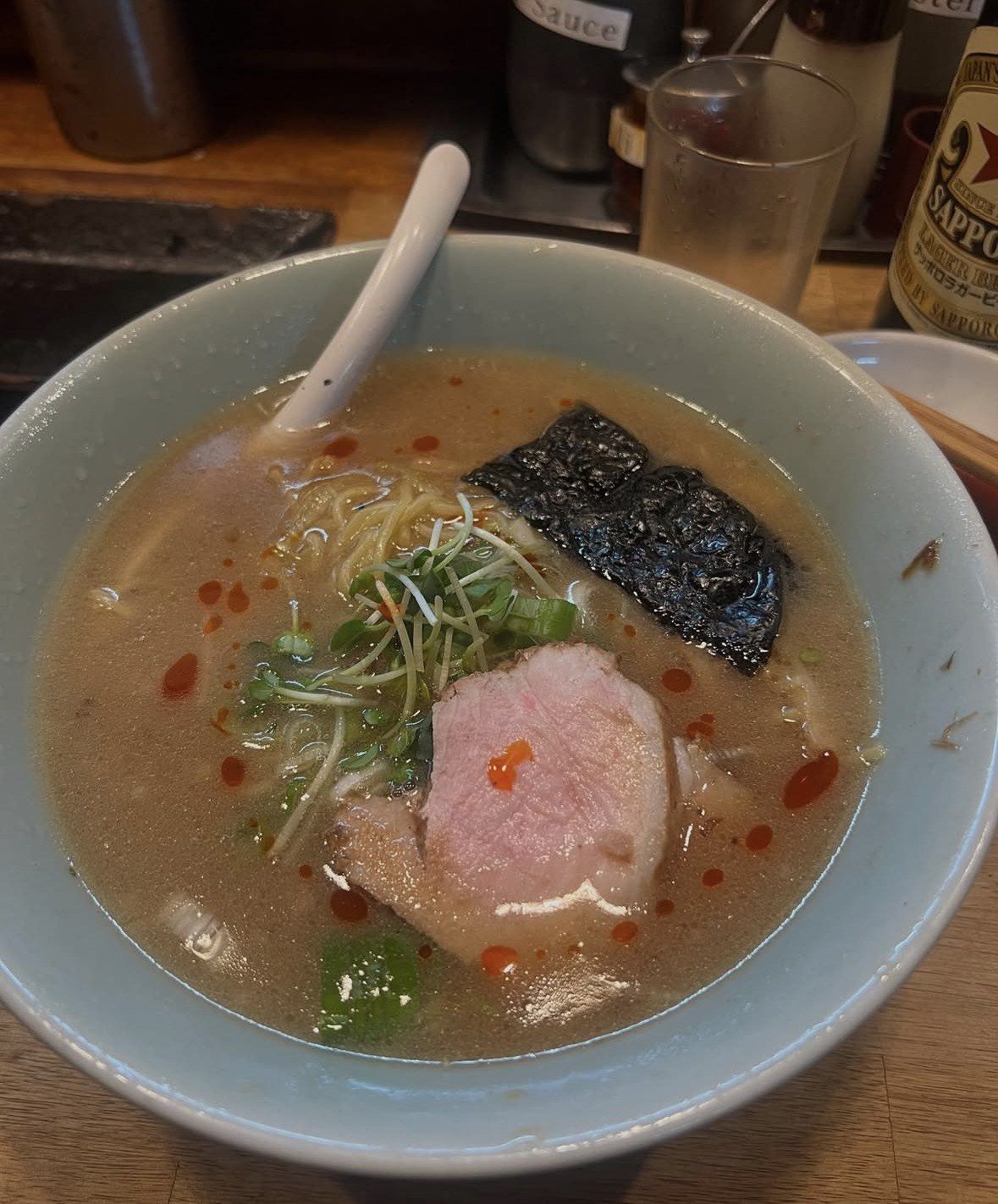
In shortMost Osaka food tour tips come down to one three-hour tasting walk: 15 to 18 small tastes at four or five eateries, three drinks, and a guide who orders for you. Start windows are 10:00 or 11:00 for market walks, 11:30 in daylight, and 16:30 to 19:00 for evening walks and bar crawls. Come hungry, do not tip, and do not smoke on the street.
3 hourslength of a typical food walk
up to 20tastings on the biggest street food walk
16:30 or 17:30usual evening start of street food walks
8% / 10%tax on takeaway / on eating in
What to expect on an Osaka food tour
Three hours, standing and walking, with the eating broken into small portions across several counters. Plan around a tasting count: one route stops at 4 local restaurants for 18 Japanese local foods and 3 drinks, from $80, rated 5.0 ★ (3,950 reviews), while the other spreads 15 signature Osaka dishes and 3 drinks over 5 eateries with commentary on history and local quirks between stops, from $76, rated 4.9 ★ (4,150 reviews). The private version is lighter on count and heavier on choice: 8 tastings balanced between sweet and savoury, from $184, rated 5.0 ★ (21 reviews).
Nobody hands you a menu. The guide walks in, orders, and the food arrives in front of you in the order the route is built around, which is the whole point in Shinsekai, where Janjan Yokocho squeezes about 50 kushikatsu and doteyaki shops, deep-fried skewers and simmered beef sinew, into roughly 130 metres of lane. Several of the walks gather outside Dobutsuen-mae Station rather than in Dotonbori, so check the exit number before you set off. Of the Osaka food tours compared on this site, the 18-foods walk meets at Exit 5 and the 15-dishes walk at Exit 1.
Flag your dietary limits when you book. The 18-foods walk can accommodate vegetarian requests, allergies and dislikes only to a degree, and you give up tastings in exchange; a strict gluten-free diet is beyond what these counters can promise. The booking page for each walk sets out dates, availability and the conditions that apply.
- Normally in the price: the tastings themselves, 3 drinks that can be alcoholic or not, and a guided walk between the eateries with the ordering done for you
- Many Osaka walks list an English-speaking guide among their inclusions, and some send tour photos afterwards
- Normally not in the price: getting to the meeting point, anything you order beyond the set tastings, and tips, which are not expected in Japan
- On the private walk: an online personalisation form after booking, direct contact with your host, and a hotel pick-up on foot for centrally located Osaka hotels or a central Starbucks Coffee meeting point, with no vehicle
The volume option in Shinsekai
If you want the broadest spread of tastes in one three-hour evening, this walk lists 18 Japanese local foods and 3 drinks across 4 local restaurants, with the ordering handled for you at every counter.
★ 5.0/5 · 3,950 reviews
Which start time fits your day
Osaka food walks sit in four start-time clusters. Market walks under the arcade leave at 10:00 or 11:00, daytime street-food routes at 11:30, evening routes at 16:30 or 17:30, and bar-hopping evenings any time between 17:00 and 19:00. Pick the cluster first, then the tour.
In high summer take an evening slot. August averages 29.0C for the month with a normal daily maximum of 33.7C, and three hours on your feet in that heat is harder work than the same route after sunset. The other option is early in the day: the tourism bureau's own summer advice for Kuromon Ichiba is to come in the morning and eat under the arcade roof before the heat builds, which is exactly why market walks depart at 10:00 or 11:00.
A fixed departure is also the only reliable anchor in these districts. Shop-by-shop hours and closing days are all the official listings give for Kuromon Ichiba and for Dotonbori, so neither place posts a district timetable you could build an afternoon around. Start times and conditions are shown on each tour's booking page, and it is worth confirming them the week you travel.
| Format | Usual start | Who it suits |
|---|
| Covered-market walk | 10:00 or 11:00 | Daytime arrivals, families, and anyone travelling in July or August |
|---|
| Daytime street-food walk | 11:30 | Travellers with an evening already booked elsewhere |
|---|
| Evening street-food walk | 16:30 or 17:30 | First-timers who want the eating after dark and the lit canal afterwards |
|---|
| Izakaya dinner and bar crawl | Between 17:00 and 19:00 | Drinkers who want doors and menus handled for them |
|---|
How much food on an Osaka food tour
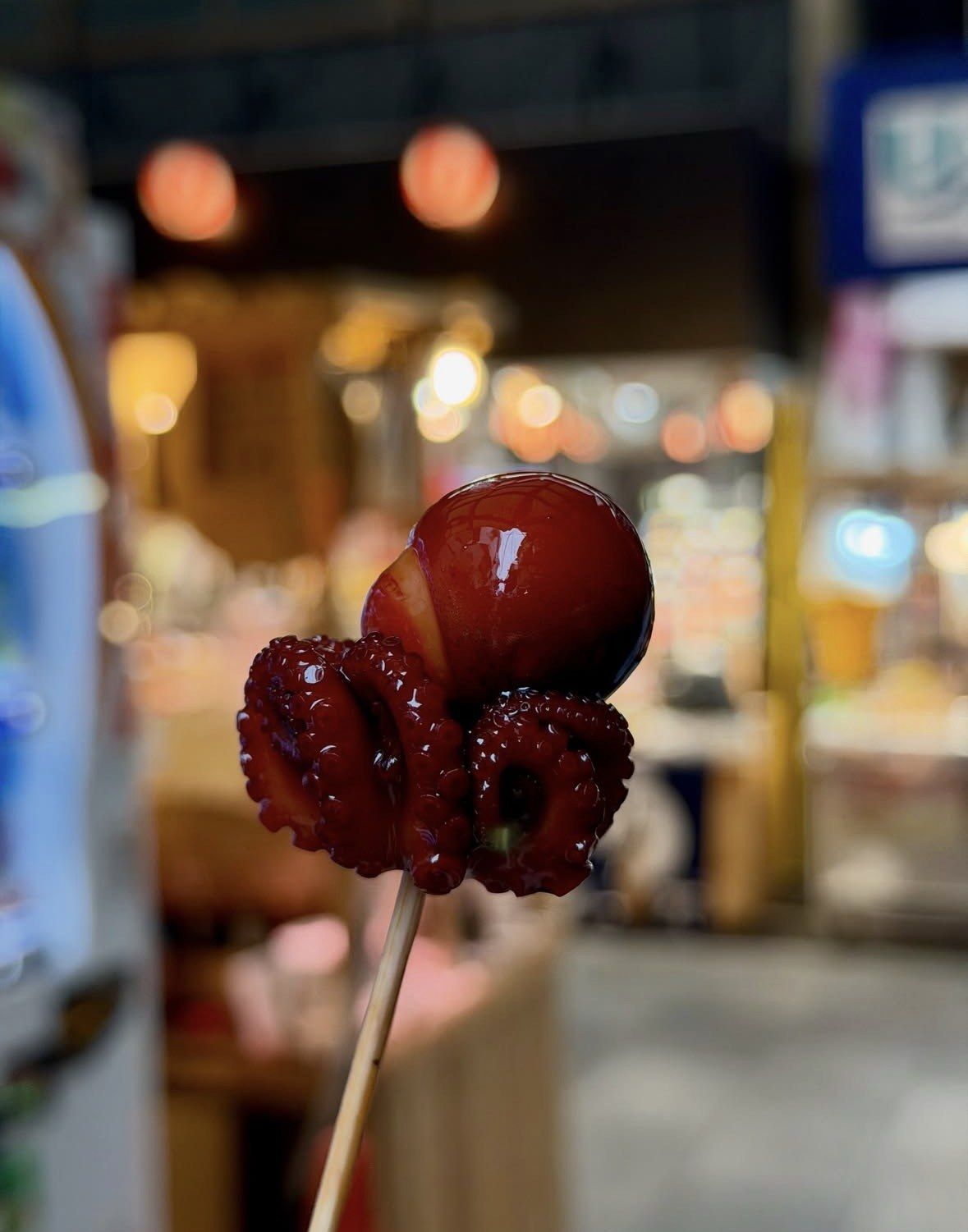
Enough that you should not eat beforehand. The two street-food walks here list 18 foods across 4 eateries and 15 dishes across 5, both with 3 drinks, inside three hours. For comparison, a two-hour market walk lists five or six samplings, and one two-district route counts out 7 pieces of kushikatsu, a few takoyaki, round octopus-filled batter balls, and one okonomiyaki, the cabbage-and-dashi batter pancake, cooked on the iron plate.
Portions are tasting size, but they land every fifteen or twenty minutes with no gaps for digesting. Skip lunch if you are on an evening departure and have nothing more than coffee if you are on a morning one. Do not book a restaurant table for straight afterwards either; you will come off the walk too full to sit down to a second meal.
Drinks are capped at the number listed, usually three on the street-food routes. Refills and anything extra you fancy at a counter are paid on the spot, so carry cash for that. Tipping does not come into it.
Tipping, smoking, shared sauce and the tax question
Japanese dining etiquette in Osaka is not complicated, but four details catch visitors in the first hour. Tipping has no place in Japan, on a food tour or in a restaurant or a taxi, and spoken thanks does the job, so a guide who waves off your notes is simply following the norm. Smoking outdoors is the one that costs money: since 27 January 2025 it has been an offence on any street in Osaka City outside a designated smoking area, and the fine is 1,000 yen. The rule relaxes once you are through a door, where restaurants and cafes can still run separated smoking sections.
At skewer counters the sauce sits in a shared container for everyone at the bar, so each skewer goes in once, before you bite it. Use the shredded cabbage on the counter as a scoop if you want more sauce after that. Your guide will point this out at the door, and it is the single rule locals notice if you get it wrong.
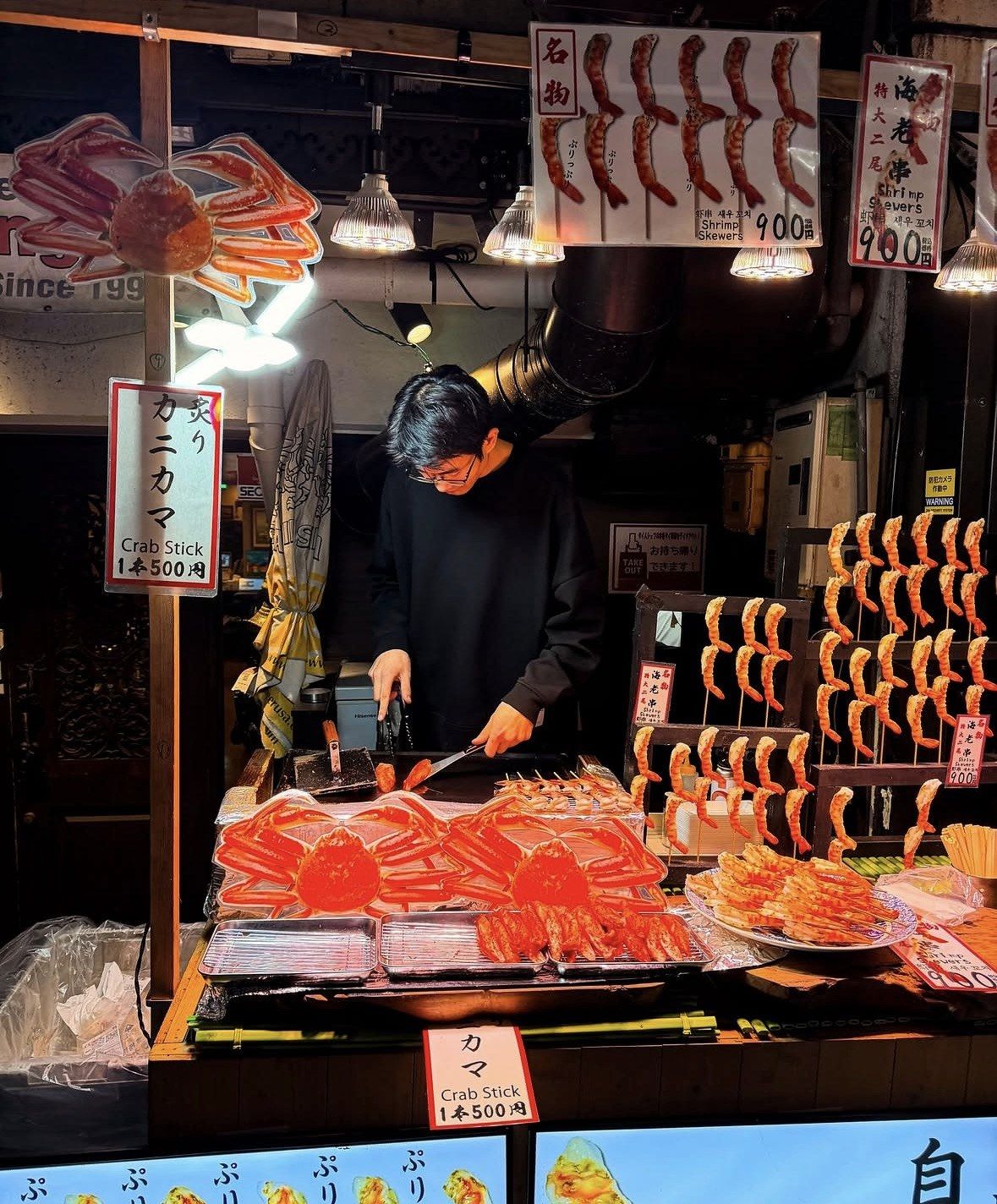
The last detail changes your bill. When the till asks if you are eating in, it is setting the tax rate: 8% on anything you carry away, 10% on the identical order taken at the shop's own seats. In the arcades, where shoppers and delivery trolleys use the same floor you do, buy, step aside to the edge of the stall and finish it there; the alleys off the Dotonbori strip are only 3 metres between walls, with doorways on both sides.
- No tip for the guide, the driver or the restaurant; say thank you instead
- No cigarette and no vape on any street in the city; use a designated smoking area
- One dip per skewer in the shared sauce pot, before the first bite
- Answer the eat-in or takeaway question honestly: 10% at the shop's seats, 8% carried away
- Finish what you bought while standing at that counter, then walk on with your hands free
How much walking, and what to wear
The distances are short and the time on your feet is long. Kuromon Ichiba is one 580-metre covered arcade with roughly 150 shops, a Shinsekai skewer lane runs about 130 metres, and the stone alleys off Dotonbori are 80 metres end to end. Between districts you are looking at 5 to 10 minutes on foot from Namba, Shinsaibashi or Nipponbashi, and some routes add a short metro hop. The tiring part is three hours of standing at counters, so wear the shoes you would wear to a market rather than the ones you packed for dinner.
Weather decides the rest of the kit. January has a normal daily minimum of 3.0C and a monthly mean of 6.2C, so an evening walk then means a proper coat and gloves; you will be outdoors between warm rooms. Three months carry the rain in the normals, June heaviest at 185.1 mm, then July at 174.4 mm and September at 152.8 mm, and July humidity of 70% will matter more to you than the rain does; the Kinki rainy season normally sets in around 6 June and lifts around 19 July. Carry a compact umbrella in those weeks and accept that the arcades will be your shelter.
Leave the hour after the walk open. The Glico sign over the canal is lit from sunset until 24:00, so the photograph by the bridge still works whenever your last plate lands, and the canal boat leaves Tazaemonbashi Pier on the hour and the half hour until 21:00 if you want twenty minutes off your feet. You check in for it on the north bank, at the reception on the first floor of the Don Quijote Dotonbori store.
Shared walk, small cap or private
Shared walks are the default and they are not large. Some evening formats cap the party in single figures, with one three-hour Osaka food walk limited to five participants, while a market-area route sets its maximum at ten. Numbers for each of the walks here are shown on the booking page, and a smaller cap generally means less waiting at each counter and more questions answered.
For a first visit, take the 18-foods walk from $80, rated 5.0 ★ (3,950 reviews): 4 eateries, 3 drinks alcoholic or not, and the broadest tasting count of the three, gathering at street level outside MEGA Don Quijote Shinsekai by Dobutsuen-mae Exit 5, a minute from the station. If you would rather trade three tastings for an extra venue and more talk about what you are eating, the 15-dishes walk at 5 eateries from $76, rated 4.9 ★ (4,150 reviews), meets at Exit 1 by the Daiichi Building with its 15 low-hanging lanterns.
Book the private walk when the group matters more than the count: 3 hours, 8 tastings split between sweet and savoury, a personalisation form after booking and direct contact with your host, from $184, rated 5.0 ★ (21 reviews). It suits couples, repeat visitors, anyone with a specific list of dishes, and anyone whose dietary needs would thin out a shared route. The personalisation form reaches you once the booking is made, so have your list of dishes ready.
Questions people ask
Do I need to book an Osaka food tour in advance?
Yes, because these walks run at set departure times rather than on demand, and the evening slots are the first to go. Expect extra pressure on dates around Tenjin Matsuri on 24 and 25 July, Golden Week on 29 April and 3, 4 and 5 May, and the three days of Toka Ebisu at Imamiya Ebisu Shrine on 9, 10 and 11 January. Open dates, the places left and the terms attached all sit on the booking page of the walk you want.
Can children join a food tour in Osaka?
It depends on the route. One three-hour Shinsekai and Dotonbori walk accepts all ages, while a shorter evening tour treats children aged five and over as full participants. For a street walk with young kids, the morning market departures at 10:00 or 11:00 are easier than a 17:30 start. Check the age policy on the booking page of the walk you want.
How much cash should I carry on a food tour?
Enough for refills and anything you order outside the set tastings, since those are the items listed as not included. You will not need money for tips, because tipping is not customary in Japan. If you plan to keep eating afterwards, remember the same order costs less taken away at 8% than eaten at the shop's seats at 10%.
Where do the street-food walks on this site meet?
Both gather outside Dobutsuen-mae Station in Shinsekai. The 18-foods walk meets at street level outside MEGA Don Quijote Shinsekai at Exit 5, below the large sign and next to the FamilyMart entrance, and guests are asked not to go inside the store or upstairs. For the 15-dishes walk, use Exit 1 instead and wait under the 15 low-hanging lanterns on the front of the Daiichi Building.
What should I do if it rains on the day of my walk?
Much of the eating happens under cover, since the arcades and the narrow lanes have roofs or awnings, so light rain changes little beyond the walk between stops. June, July and September are the wet months in the normals, so pack a small umbrella rather than an open hood. If heavy weather is forecast, a seated indoor format is the more comfortable use of the slot.
Read also