In shortYes, for most first-time visitors. Three hours, 18 Japanese local foods and 3 drinks at 4 local restaurants in Shinsekai, from $80, with a guide reading the boards and ordering at each counter, and a start time you can plan around in districts where every shop sets its own hours and closing days. If you have only two or three nights, it pays for itself fastest.
from $803-hour street food walk with dinner
18 foods, 3 drinksincluded on that walk, at 4 eateries
5.0 ★ (3,950)rating and number of reviews
8% / 10%tax on takeaway / on eating in
The short answer, and who it fits best
Yes, if this is your first time in the city or your stay is short. Measured against a single evening, from $80 covers 3 hours, 18 Japanese local foods and 3 drinks inside 4 local restaurants, and 3,950 reviewers have settled that walk at 5.0 ★. What that buys is a departure at a set hour, someone to walk you through doorways and order at the counter, and four picked places in districts where fifty shops sit shoulder to shoulder in one lane. The Osaka food tour table on this site's homepage sets that walk beside the other 12 by length, starting price and rating.
Three nights in Osaka is where the arithmetic works. The city's tourism bureau sells Osaka on kuidaore, the saying that Kyoto ruins itself on clothes and Osaka on food, and calls the place the Kitchen of the Nation. Three hours with someone who eats here every week turns that into specific plates on a counter instead of a walk past lit signboards.
No tour gives you extra stomach capacity. Eighteen tastings and three drinks across four eateries land as dinner and then some, so leave the rest of that evening empty.
The broadest tasting list for a first visit
Four eateries in Shinsekai, 18 Japanese local foods and 3 drinks alcoholic or not inside 3 hours, from $80 and sitting at 5.0 ★ (3,950 reviews), with a guide doing the ordering at every counter.
★ 5.0/5 · 3,950 reviews
What you are paying a guide to do
The handwritten board in the lane is the real barrier, along with the eight-seat counter with a curtain across the door and the standing bar where the regulars order without looking at anything. A guide reads the board, asks whether there is room, and puts the order in. None of that can be arranged from a hotel lobby the morning before.
Neither Kuromon Market nor Dotonbori keeps district-wide hours. The official listings for both state that opening times and closing days are set by each individual business, so a self-planned eating schedule has nothing fixed to hang on. For a question about one particular shop in the arcade, the Kuromon Market Shopping District Promotion Association answers on 06-6631-0007.
- Consumption tax is a reduced 8% on food you carry away and 10% if you sit in the shop's own seating area, which is why staff ask before they ring it up.
- Lighting up on the pavement costs you a ¥1,000 fine: Osaka City has banned street smoking outside designated areas since 27 January 2025, and that covers every lane these walks use in Shinsekai and Dotonbori.
- A separated smoking section inside a restaurant or cafe is still permitted, but the street ban applies again the moment you step back outside.
- For the 18-foods walk the group forms on the pavement in front of MEGA Don Quijote Shinsekai, at ground level by Exit 5 of Dobutsuen-mae, one minute from the ticket gates; a FamilyMart stands next to the entrance, and the instruction is to wait outside rather than head into the store or upstairs.
Where an Osaka food tour helps most
Daytime eating in Osaka is centred on Kuromon Market: one 580-metre roof, somewhere around 150 shops, the exit of Nippombashi Station on the Osaka Metro Sennichimae Line at 2-4-1 Nippombashi right at the entrance, and an eat-in corner serving sushi, seafood bowls and tempura bowls. Supplying the city's restaurants earned it the names Osaka's kitchen and Osaka's stomach, and it has been an officially recognised market since 1902.
Evenings work differently. The counters worth sitting at are one block off the main drag, in lanes like Janjan Yokocho in Shinsekai, about 130 metres of kushikatsu (deep-fried skewers) and doteyaki (beef sinew simmered in miso) spread across roughly 50 shops, or the stone alleys of Hozenji Yokocho, 3 metres from wall to wall, where kappo restaurants, bars, okonomiyaki (savoury cabbage pancake) shops and skewer counters share one pavement. A guided walk gets you past those curtains at an hour fixed in advance: the Dotonbori and Shinsekai walk leaves at 11:30, 16:30 or 17:30, and the bar-hopping routes between 17:00 and 19:00.
Book one guided evening early in the stay and build the rest of your eating around it. You come away with four places you now know how to use, the stations that serve them and a sense of what the boards say, which makes the rest of the stay easier to plan.
What to tell them if you have dietary rules
Osaka's signature dishes are built on animal stock, and that catches vegetarians out more than anything else here. The Kansai batter is wheat flour loosened with dashi, cabbage is the one ingredient nobody leaves out, and pork is the topping most people order; the udon broth served alongside it is built on kelp and bonito flakes. Japan's national tourism organisation warns vegan travellers to ask about the stock, because bonito can be in the bowl with no fish in sight.
Vegetarian requests, allergies and dislikes are accommodated to a degree on the 18-foods walk, at the cost of some of the tastings, and a strict gluten-free diet sits beyond what that route can cover. Firm restrictions point to the private walk instead: 3 hours, 8 tastings split between sweet and savoury, a personalisation form that arrives online once you have booked, and your host reachable directly while the plan is drawn up, from $184 per person when two book and rated 5.0 ★ (21 reviews).
For a plant-based meal around a tour, Paprika Shokudo Vegan sits at 1-9-9 Shinmachi, Nishi-ku, about 2 minutes from Exit 2 at Yotsubashi Station, with lunch from 11:30 to 15:00, dinner from 17:30 to 21:30 and Wednesdays closed. In Honmachi, Green Earth trades Monday to Saturday between 11:30 and 17:00, and the kitchen takes last orders at 16:30. CHIBO Diversity, the Muslim- and vegetarian-friendly okonomiyaki room run by Chibo, is on the 7th floor at 1-5-5 Dotonbori. For a query about one single ingredient, the Osaka Convention and Tourism Bureau takes calls on 06-6131-4550, daily between 9:00 and 17:30.
Fitting one walk into a short stay
A same-day arrival still leaves room for an evening start. Nankai's Limited Express Rapi:t reaches Namba from Kansai Airport in as little as 34 minutes and the Airport Express takes about 45 minutes, which is enough to drop bags and ride out to Dobutsuen-mae for a 16:30 or 17:30 group. Namba Station puts you at the edge of Dotonbori as you come up the stairs, and it is served by Nankai, Kintetsu and three Osaka Metro lines, the Midosuji, Sennichimae and Yotsubashi.
Take the later slots in summer. Mean temperature in August is 29.0C and the normal daily high 33.7C, which you feel across three hours spent standing and walking outdoors. Rainfall normals put June at the top with 185.1 mm and July just behind on 174.4 mm. The arcade works the other way round: the bureau's advice is to go in the morning and eat under the roof before the heat builds.
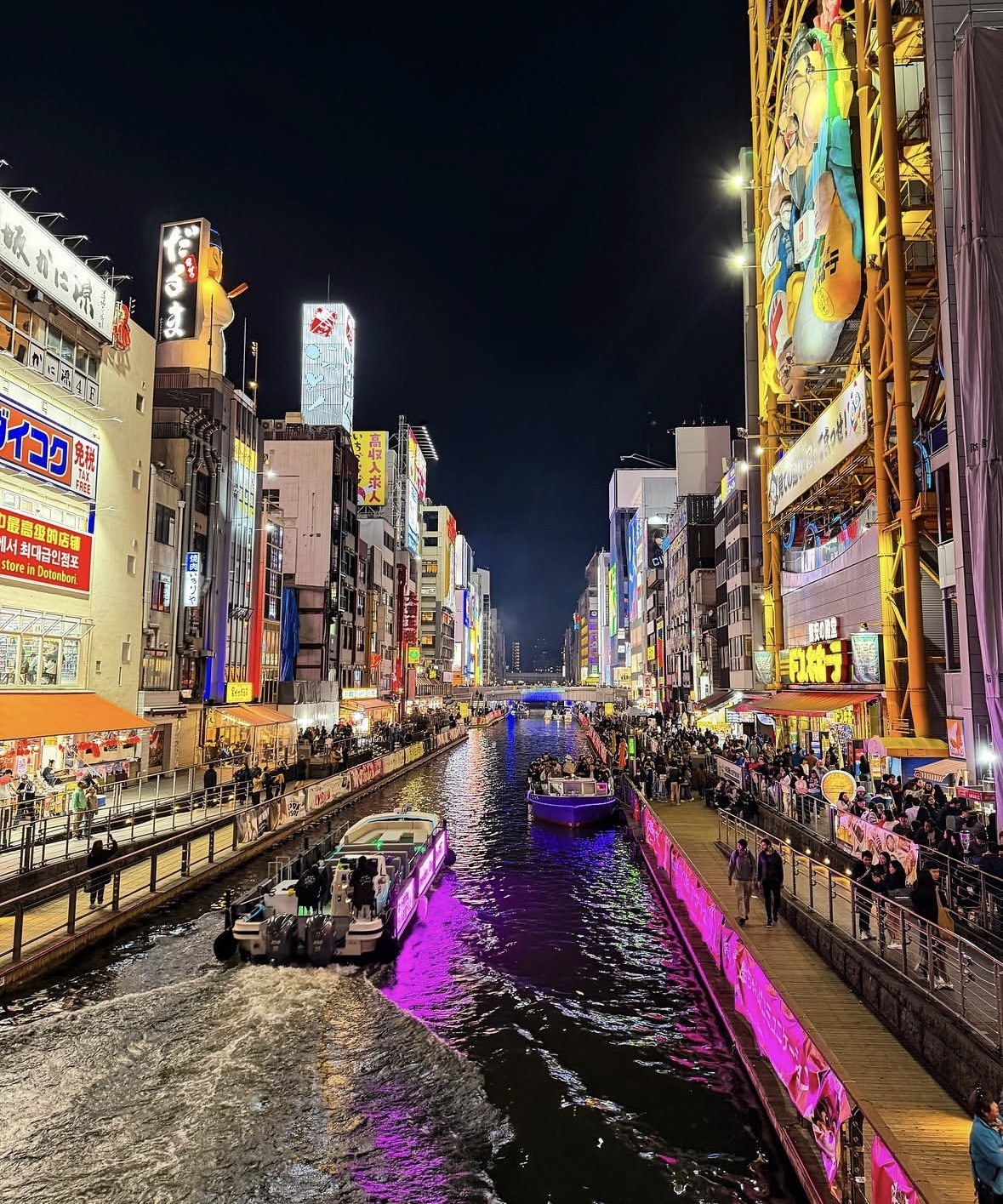
Crowds spike on fixed dates: 24 and 25 July for Tenjin Matsuri, 29 April and then 3, 4 and 5 May for Golden Week, and 9, 10 and 11 January for the three days of Toka Ebisu at Imamiya Ebisu Shrine. Lighting on the Glico sign over the canal runs from sunset through to 24:00, so the photograph is still there long after your last tasting. Each walk shows its dates, availability and conditions on the booking page.
Which walk to book, case by case
All three walks compared here run 3 hours, so plan one per day rather than two in a row.
First visit, and you want the broadest spread of dishes in one go: take the 18-foods street walk, from $80, which puts 18 Japanese local foods and 3 drinks across 4 local restaurants and starts in Shinsekai. If you would rather cover the two icon districts in one evening and get your hands on a griddle, take the Dotonbori and Shinsekai foodie walk, from $109, with 7 pieces of kushikatsu, a few takoyaki (octopus balls turned in a moulded plate), one piece of okonomiyaki you help cook on the iron plate and 2 drinks, plus ¥190 of transport between stops paid on the day. Repeat visitors, couples, small groups and anyone with a strict diet should take the private walk, from $184 per person when two book, and fill in the personalisation form.
| Tour | Duration | From | Rating | What you eat and drink | Meeting point | Best for |
|---|
| Osaka Street Food Tour: 18 Foods & 3 Drinks at 4 Eateries | 3 hours | from $80 | 5.0 ★ (3,950) | 18 Japanese local foods, 3 drinks alcoholic or not, 4 local restaurants | Street level outside MEGA Don Quijote Shinsekai, Dobutsuen-mae Exit 5 | First-timers after the highest tasting count in one evening |
|---|
| Osaka Local Foodie Walking Tour in Dotonbori and Shinsekai | 3 hours | from $109 | 4.8 ★ (1,159) | 7 kushikatsu, a few takoyaki, 1 okonomiyaki you help cook, 2 drinks, tour photos | FamilyMart Sanno Dobutsuen-mae, outside Exit 1 | Two classic food quarters in one walk, with time at the griddle |
|---|
| Osaka Private Food Tours by Local Foodies: 100% Personalized | 3 hours | from $184 | 5.0 ★ (21) | 8 tastings balanced between sweet and savoury, planned with your host | Hotel pick-up on foot for centrally located hotels, or a central Starbucks Coffee | Dietary rules, repeat visitors, couples and small groups |
|---|
Questions people ask
Do I tip the guide on an Osaka food tour?
No. Japan does not run on tips, and that covers food tours as well as restaurants and taxis; thanks are spoken out loud instead. Some listings show gratuities as not included, which is a line in a template rather than an expectation. Put that cash towards extra drinks, since the walks include a set number.
Will the tastings replace dinner?
Treat them as dinner. The 18-foods walk serves 18 Japanese local foods and 3 drinks across four eateries in 3 hours, and the Dotonbori and Shinsekai walk serves 7 pieces of kushikatsu, a few takoyaki, one piece of okonomiyaki and 2 drinks. Both are enough food for the evening, so plan nothing afterwards beyond a slow walk by the canal.
Can children join?
The operator of the Dotonbori and Shinsekai walk states that all ages are accepted on that route. It is a standing, outdoor format for 3 hours, which suits older children better than toddlers. For a family group that wants a slower pace, the private walk is the easier booking, since you set the itinerary with the host in advance.
Are drinks included, and can I have non-alcoholic ones?
The 18-foods walk includes 3 drinks that can be alcoholic or non-alcoholic, and the Dotonbori and Shinsekai walk includes 2 on the same basis. Anything you order beyond those is on you at each stop. The private walk covers 8 tastings, with extra food, drinks and attraction tickets outside the price.
Does the price cover transport between the stops?
The two-district walk lists ¥190 of transport fees as not included, paid by you on the day. The private walk is on foot with no vehicle, and transport is excluded there too. Everything else on these routes is walking distance inside the district, and the heart of the Dotonbori strip sits 5 to 10 minutes on foot from Namba, Shinsaibashi and Nipponbashi stations.
Read also