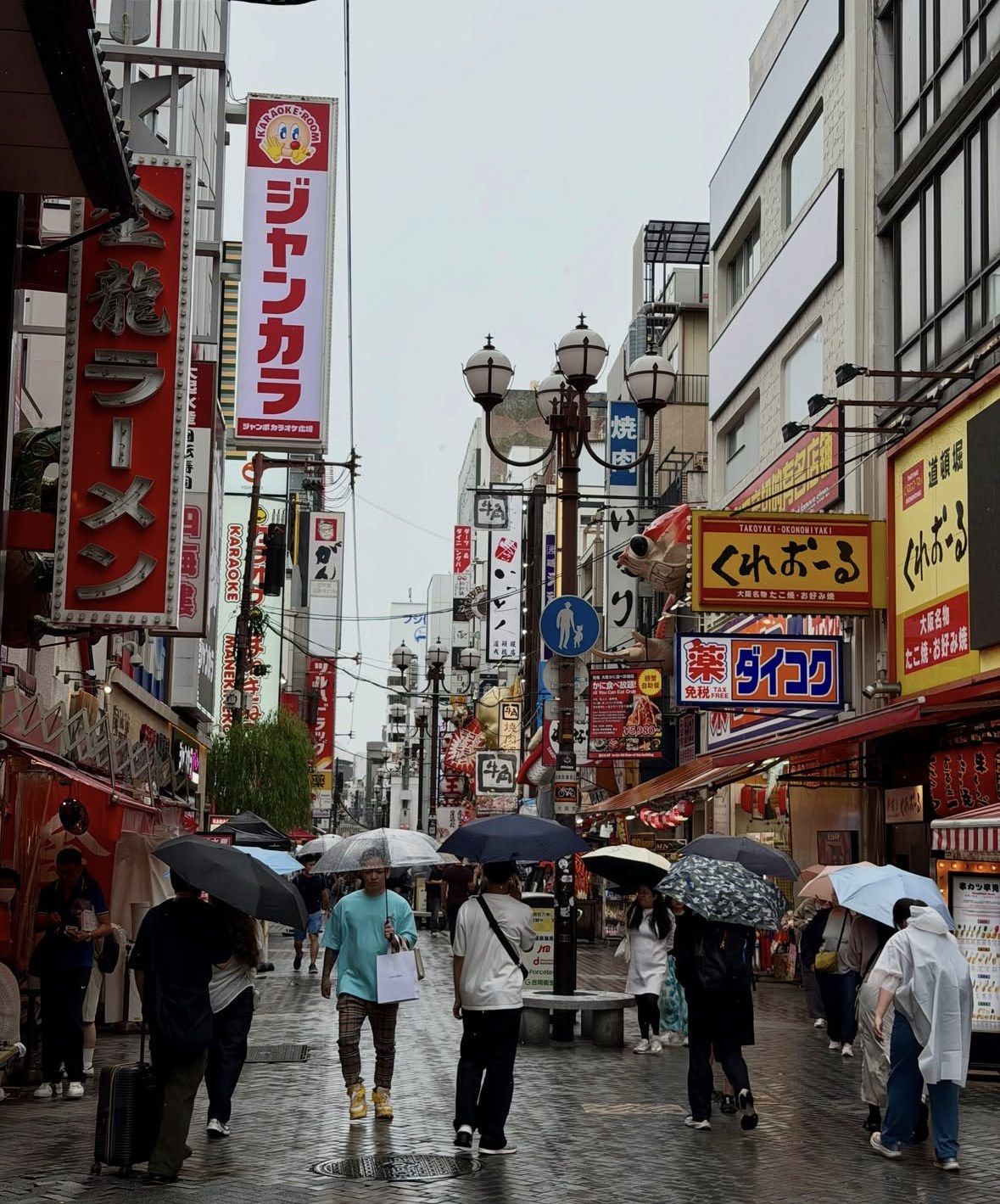
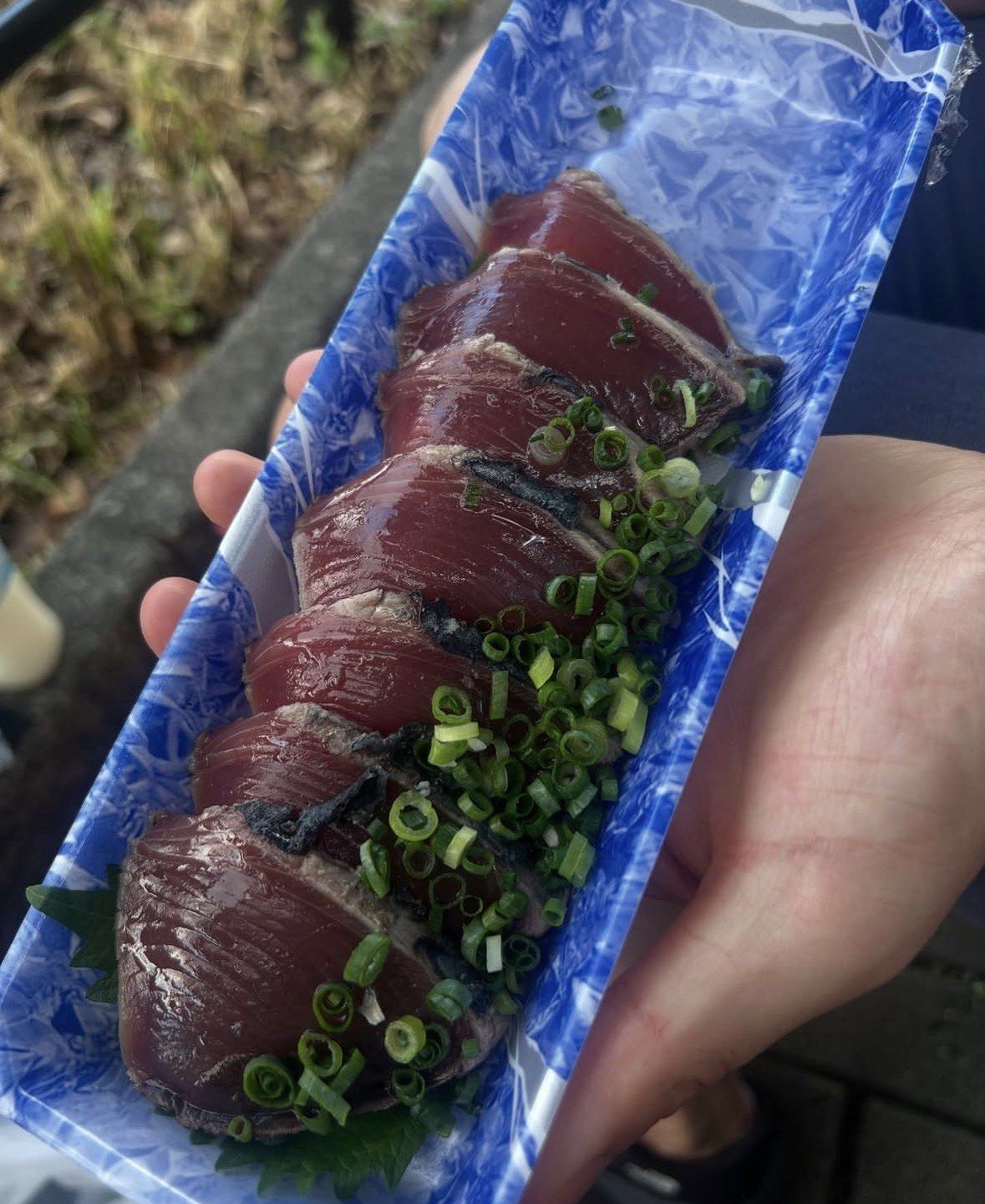
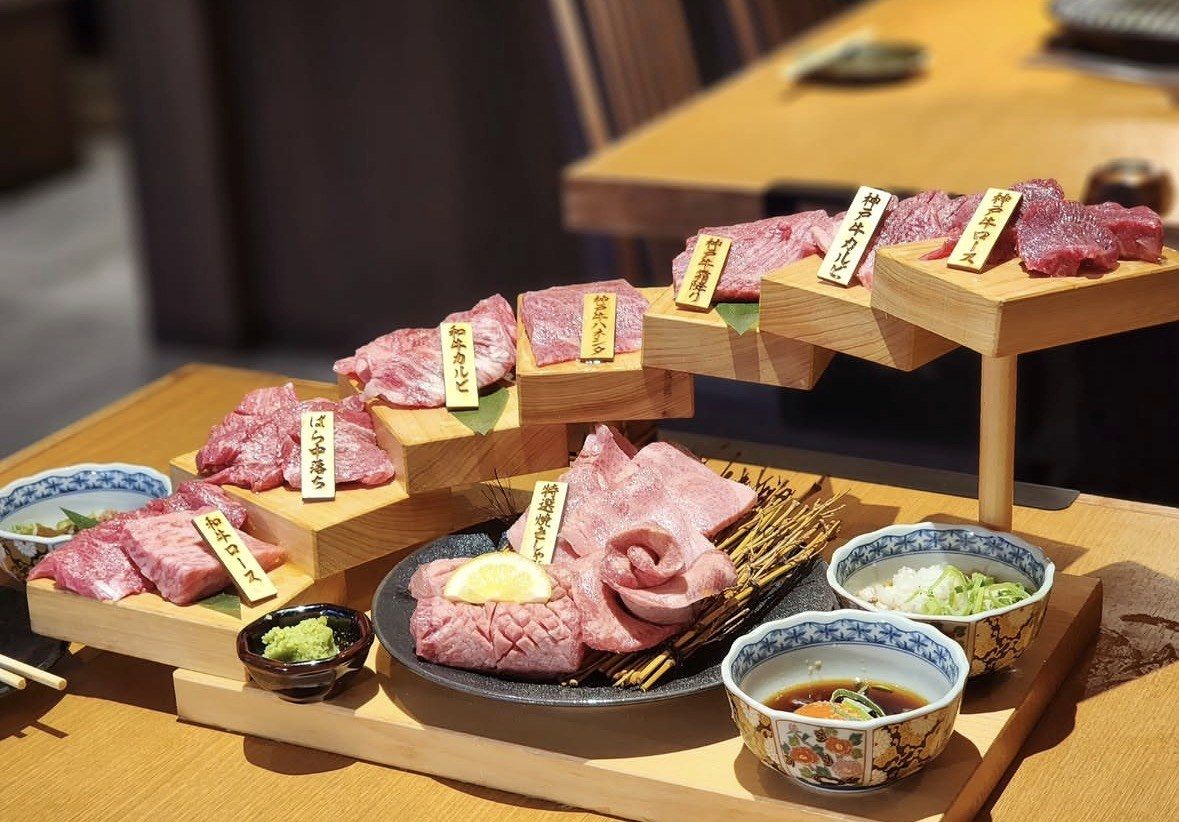
In shortOsaka street food comes out of counter windows and standing shops: you order at the hatch and eat a step away from it. Tax is 8% on takeaway and 10% if you use the shop's seats, which is why staff ask before ringing it up. Begin in Dotonbori, the 580-metre Kuromon arcade or Janjan Yokocho in Shinsekai, then work outwards to Tenma or Tsuruhashi.
580 mcovered Kuromon Market arcade
about 150shops inside the Kuromon arcade
8% / 10%tax on takeaway / on eating in
¥1,000fine for smoking on the street
How ordering and eating work at the counter
Hatches, windows and standing counters do the selling here, not rows of stalls out under the sky. You read the board, order at the window, pay on the spot, then step aside while your takoyaki (octopus-filled batter balls) comes off the hot plate. There is rarely a queue system and almost never a table. The shop is as wide as its griddle, and the eating happens on the two or three metres of pavement or arcade floor in front of it.
Consumption tax splits the price in two. Food you carry away is taxed at the reduced 8%, while the same order eaten in the shop's seating area is taxed at 10%, which is why staff ask before they ring it up. Say take out when you do not need a seat, and the difference adds up across a day of grazing. Expect the same question on the 2.5-hour Dotonbori and Kuromon walk, a food tour in Osaka where snacks are not included and you buy at the counters yourself.
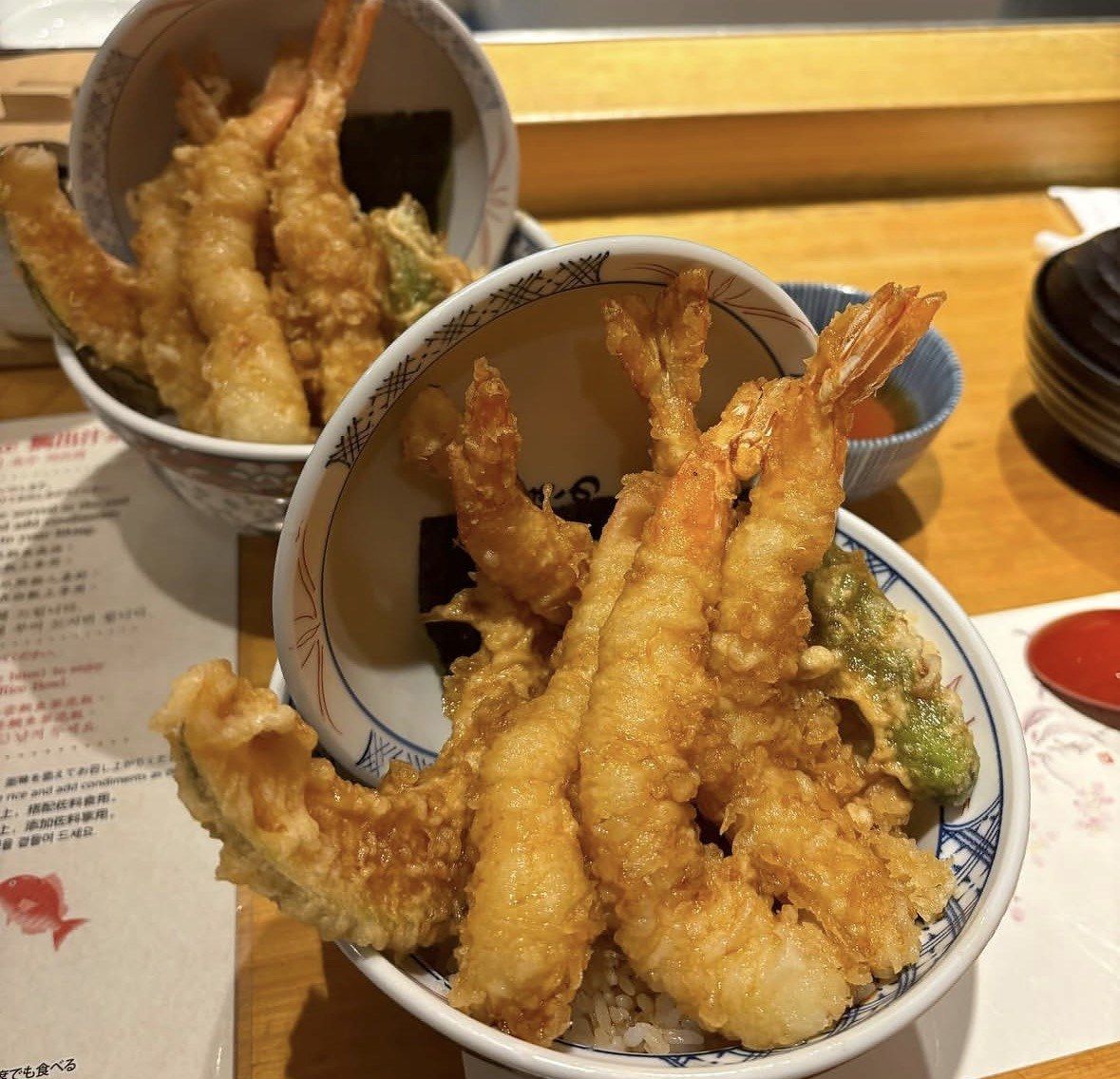
Covered arcades are where much of this eating on the spot happens. Kuromon Ichiba Market runs about 580 metres under one roof with roughly 150 shops, thick with shoppers and delivery trolleys, and its eat-in corner serves sushi, seafood bowls and tempura bowls. No arcade association publishes a formal ban on eating while you walk, so treat it as local practice: finish at the counter, where the shop can take back your tray, stick and cup.
The snack districts and how far apart they are
Three of the six districts sit in Minami and work as one eating area. Namba Station is the main gateway, with Nankai and Kintetsu trains plus the Osaka Metro Midosuji, Sennichimae and Yotsubashi lines all feeding it, and from Namba, Shinsaibashi or Nipponbashi the busiest run of counters is 5 to 10 minutes on foot. The Kuromon arcade begins at the Nippombashi Station exit, and Hozenji Yokocho is five minutes from Namba, one block off the main drag.
Shinsekai is the second pole, reached on the Metro at Dobutsuen-mae. Its Janjan Yokocho packs around 50 kushikatsu and doteyaki shops into roughly 130 metres of lane. Tenma lies north on the JR Osaka Loop Line, one stop from Osaka Station, with hundreds of izakaya in the alleys beside the 2.6 km Tenjinbashisuji arcade. Tsuruhashi is east, where Ikuno Koreatown's Miyuki-dori has run about 500 metres since 1993.
Opening patterns are set shop by shop in both Dotonbori and Kuromon, according to the official listings, so no district hands you a timetable to plan around. For Kuromon in summer the tourism bureau's advice is to come in the morning and eat under the arcade before the day's heat builds, with an August monthly mean of 29.0C and a normal daily maximum of 33.7C behind that.
| District | Station and walk | Scale | What is on the counters |
|---|
| Dotonbori | Outside Namba Station; food strip 5-10 min from Namba, Shinsaibashi or Nipponbashi | Canal dug in 1612; Glico sign since 1935 | Takoyaki windows and okonomiyaki hot plates |
|---|
| Nipponbashi (Kuromon Ichiba) | At the exit of Nippombashi Station, Sennichimae Line, 2-4-1 Nippombashi | About 580 m, roughly 150 shops | Market seafood, plus an eat-in corner with sushi, seafood and tempura bowls |
|---|
| Shinsekai | Dobutsuen-mae; Exit 5 is a 1-minute walk | Janjan Yokocho about 130 m, around 50 shops | Kushikatsu, deep-fried skewers, and doteyaki, miso-simmered beef sinew |
|---|
| Namba back lanes (Hozenji Yokocho) | 5 minutes on foot from Namba Station | Two stone-paved alleys, 80 m long and 3 m wide | Kappo restaurants, bars, okonomiyaki and kushikatsu shops |
|---|
| Tenma | Tenma Station on the JR Osaka Loop Line, one stop out of Osaka Station | Tenjinbashisuji about 2.6 km, about 40 min end to end | Hundreds of izakaya, informal pubs, in the side alleys |
|---|
| Tsuruhashi (Ikuno Koreatown) | Tsuruhashi Station on Kintetsu, Metro Sennichimae or the JR Loop, or 10 min from Momodani | Miyuki-dori about 500 m, more than 100 eateries and shops | Korean grills, side dishes and shops serving a community of about 30,000 residents of Korean descent |
|---|
Dotonbori and Kuromon in one 2.5-hour walk
The walk that links the two daylight districts on this page, with a licensed guide, all fees and taxes included and snacks not included, from $30.
★ 4.9/5 · 227 reviews
Eating on the street after dark
Night is when the counters are busiest and when ordering gets harder, because the shops that stay open late are standing bars and izakaya with no printed English. Kukuru's Dotonbori main store at 1-10-5 Dotonbori does takeout until 21:30 on weekdays and 21:45 at weekends, which is roughly the rhythm of the window trade along the strip. After that the eating moves indoors and sideways, into Hozenji Yokocho's two alleys and the lanes behind Namba.
Guided walks start inside a narrow window. Street-food walks begin at 11:30, 16:30 or 17:30, and bar-hopping evenings start between 17:00 and 19:00, the hour when kitchens are lit and the alleys fill. In July and August, take the 17:00 to 19:00 starts.
The Glico sign over the canal is lit from sunset until 24:00, so the photo stop still works long after the griddles have been scraped down. The sign you photograph is the sixth in the line, up since October 2014 and measuring 20.00 m high by 10.38 m wide.
Kuidaore and the habit of grazing
The city explains itself with kuidaore, eating yourself into ruin. The tourism bureau quotes the saying that Kyoto ruins itself on clothes and Osaka on food, and also calls Osaka the Kitchen of the Nation. In practice that means small portions bought often, from several shops, standing up, with the next stop a few doors along.
Takoyaki, the best-known of these snacks, is younger than most visitors assume. Aizuya's predecessor dish was radioyaki, filled with konjac and beef instead of octopus, and the shop still sells it; the tourism bureau dates the spread of takoyaki shops across the city to the 1950s. Wanaka pours an Akashi-style version, wanko-dako in warm dashi, only at its Sennichimae main store, its Tako-yakushi store and its Tenjin-yon store.
For a rainy hour on the same subject, the Dotonbori Konamon Museum at 1-6-12 Dotonbori is run by Kukuru and opens 10:30-22:30 on weekdays and from 9:00 at weekends and on holidays.
Rules that catch first-timers out
Smoking while you eat on the move is not an option anywhere in Osaka City: the street-smoking ban has applied across the whole city since 27 January 2025, the fine is 1,000 yen, and the pavements you graze on in Dotonbori, in Shinsekai and under the Kuromon roof are all inside it. Use the designated smoking areas. The city ordinance page does not spell out heated-tobacco or vaping devices, so assume those belong in the designated areas too; indoors, restaurants and cafes may still keep separated smoking sections.
Tipping is not customary anywhere in Japan, on food tours or in restaurants and taxis, and thanks are said out loud instead. Nobody at a takoyaki window will know what to do with coins left on the counter.
Carry cash. The market association posts neither its own stall rules nor a list of which shops take cards, so plan for cash at small counters and keep some aside for drinks beyond the ones a tour includes. Whether a particular Kuromon counter is trading that day is a question for the arcade's Shopping District Promotion Association, which handles shop-level enquiries on 06-6631-0007.
- Answer take out when you plan to stand and eat: 8% tax, against 10% in the shop's seats
- No smoking on any street in the city, designated areas only, 1,000 yen fine
- No tipping, at counters or on a guided walk
- Cash for small counters and for refills
- Hours in Dotonbori and Kuromon are set shop by shop, so check on the day
Which district to start in, and which walk covers it
Start in Minami if this is your first trip. Dotonbori and the Kuromon arcade sit a few minutes apart on foot, they run through the daylight hours, and they give you takoyaki, okonomiyaki (savoury cabbage pancake cooked flat on an iron plate) and market seafood with no train ride between stops. The 2.5-hour walking tour of Dotonbori, Kuromon Market and street food covers exactly that pairing with a licensed guide, from $30 and rated 4.9 ★ (227 reviews), with all fees and taxes included and snacks not included, meeting in front of the Apple Store Shinsaibashi.
Start in Shinsekai if you want the highest tasting count in one evening. The Osaka Street Food Tour with 18 foods and 3 drinks at 4 eateries runs 3 hours, from $80, rated 5.0 ★ (3,950 reviews), and gathers at street level outside MEGA Don Quijote Shinsekai at Dobutsuen-mae Exit 5, a one-minute walk from the station, with FamilyMart beside the entrance. Guests are asked not to enter Don Quijote or MARUHAN and not to go upstairs.
Tenma and Tsuruhashi are second-visit districts. They are where residents eat rather than where the canal photographs are taken, and they are best saved until you have seen the canal strip and the Glico sign. One caveat before you commit to the Shinsekai evening: on the 18-foods walk vegetarian requests, allergies and dislikes can be met up to a point, with the number of tastings cut back as a result, and strict gluten-free sits outside what the walk can do; dates, availability and conditions are shown on the booking page.
Questions people ask
Does Osaka have open-air street food markets at night?
Not in the form travellers expect from Bangkok or Taipei. The grazing happens at permanent counter shops and under covered arcades such as the 580-metre Kuromon Ichiba in Nipponbashi, plus narrow lanes like Janjan Yokocho in Shinsekai at around 130 metres. These shops have shutters and fixed addresses, so once the window trade closes the lanes empty instead of filling with stalls.
What time do the stalls and arcades open?
Each shop decides for itself. The official listings for both Kuromon Market and Dotonbori state that opening times and closing days are fixed shop by shop, so there is no district-wide answer. In summer the tourism bureau's line on Kuromon is to come in the morning and eat under the arcade roof while the day is still cool, which is also why the walks built around the market leave at 10:00 or 11:00. Osaka Kizu Wholesale Market trades 07:00-13:00 depending on the shop and runs a public Morning Market on the second and last Saturday of each month, 09:00-12:00.
Can I pay by card at a takoyaki window?
Assume cash. The market association's own site does not publish which shops accept cards, and small counters are run by one or two people with a till rather than a terminal. Keep coins and small notes for the windows, and set cash aside for drinks beyond those included on a guided walk.
Is Osaka street food suitable for vegetarians?
The standard versions are not. Dashi goes into the okonomiyaki batter along with the wheat flour, pork is the usual topping, and the local udon broth is built on kelp and bonito flakes; Japan's national tourism organisation makes the point that bonito can be in a dish with no fish in sight. Paprika Shokudo Vegan, at 1-9-9 Shinmachi in Nishi-ku, is the plant-based stop to slot into a day of arcade walking: lunch 11:30-15:00, dinner 17:30-21:30, shut on Wednesdays. Ingredient questions can go to the Osaka Convention and Tourism Bureau, which answers on 06-6131-4550 between 9:00 and 17:30 every day.
How do I get from Kansai Airport to the street food districts?
Aim for Namba, a short walk from Dotonbori and one Metro stop from the Kuromon arcade. On Nankai, the Limited Express Rapi:t does Kansai Airport to Namba in as little as 34 minutes, while the Airport Express takes about 45 minutes on a standard ticket. Land in the afternoon and a 17:00 to 19:00 start is the realistic slot for your first evening.
Read also