In shortOsaka izakaya culture runs on small shared plates ordered in rounds rather than one course each, a per-person seating charge at most seated shops, and standing bars where you drink and move on. Menus in the back lanes are usually Japanese only and counters are small, so guided crawls exist and start between 17:00 and 19:00. Tipping is not customary anywhere in Japan.
17:00-19:00when the bar crawls usually start
3 venuesvisited on the Dotonbori izakaya crawl
80 mlength of the Hozenji Yokocho alleys
hundredsof izakaya in the Tenma alleys
How a round works in Osaka izakaya culture
An izakaya is a drinking shop that cooks: you sit down to drink, and food arrives in small plates meant for the whole table. Nobody orders a starter, a main and a dessert. You pick two or three dishes, you order drinks with them, and when the plates are empty you order again. That rhythm of rounds is the whole structure of the evening, and it is why a three-hour crawl can cover several shops without anyone leaving full and silent at the first one. Two of the Osaka food tours on this site are built on that rhythm: the bar crawl with dinner plus food and drinks at 3 venues, and the backstreet nightlife walk with two izakaya and the first drink at each included.
Most seated izakaya add a per-person seating charge to the bill, often arriving as a small dish you did not ask for. It is a normal part of the price of sitting down, it appears on the receipt, and it is not a tip or a service error. Standing bars, tachinomi, usually skip it: there are no seats, you stand at a waist-high counter, you drink, you pay, you go. For a crawl that visits several places in one evening the standing format is the useful one, because nobody has to turn over a table for you.
Drinks come by the glass and by the bottle, and the list leans on beer, highballs, shochu and sake. If a shop has a handwritten board on the wall, that is the day's cooking rather than the printed list. Order from the board when someone can read it for you.
Osaka drinking districts, lane by lane
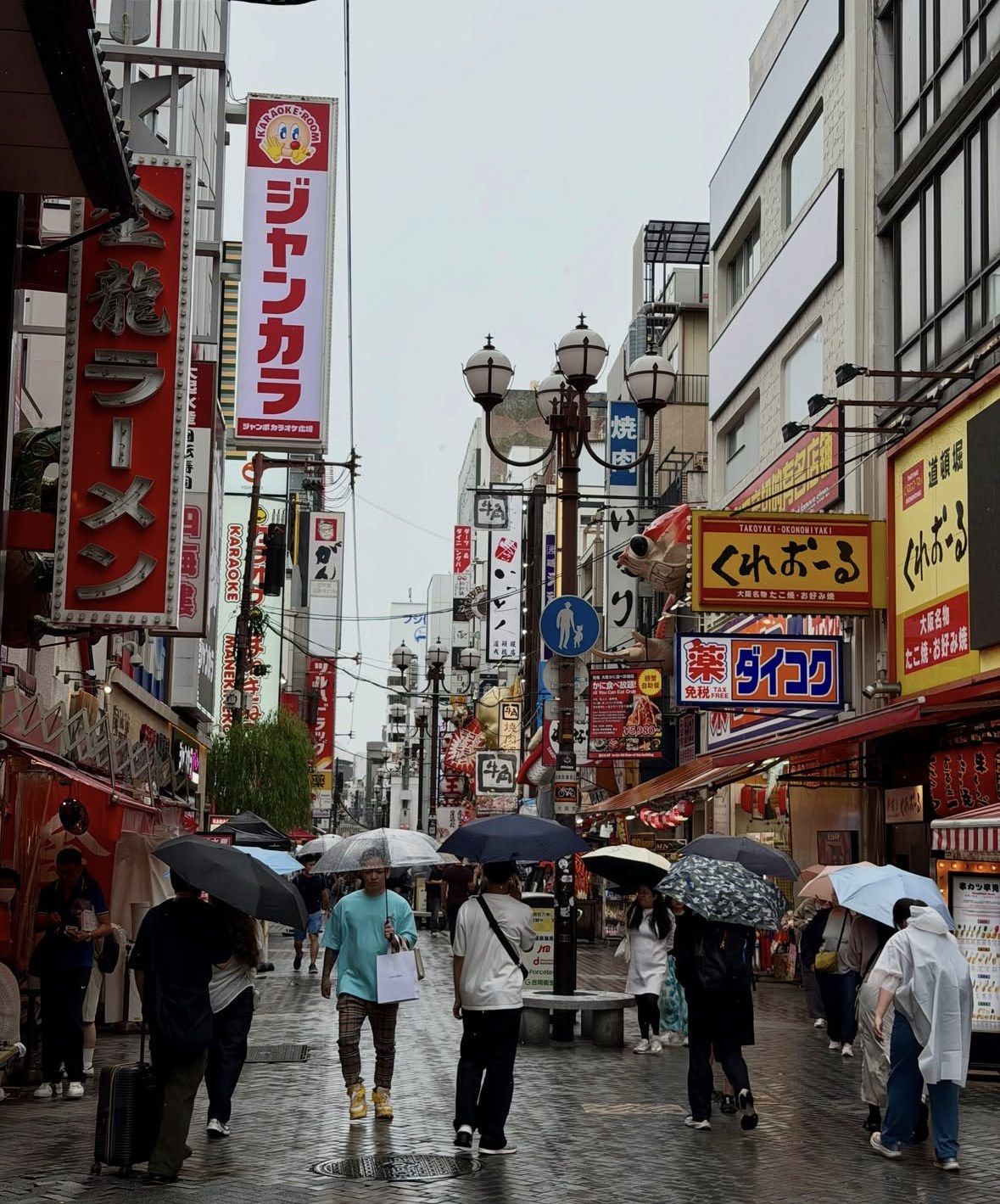
The drinking is not on the bright canal frontage. It is one or two blocks behind it, in lanes where a shop fits six or eight people at a counter and the door is half-covered by a cloth curtain.
Behind Namba Station sits the stretch people call Ura Namba, the back streets of small izakaya and standing bars tucked between the station blocks and the main shopping arcades. Namba is the easiest district to reach for an evening start, with Nankai and Kintetsu trains and the Osaka Metro Midosuji, Sennichimae and Yotsubashi lines all arriving there, and the busy run of counters sitting 5 to 10 minutes on foot from Namba, Shinsaibashi or Nipponbashi.
Hozenji Yokocho is the alley version of the same thing, a block south of the canal: a pair of stone-paved lanes running east to west, 80 metres from end to end and 3 metres between the walls, with kappo restaurants, bars, okonomiyaki shops and kushikatsu counters, skewers fried to order, sharing the same pavement. It is a five-minute walk from Namba Station. Because the lane is only three metres wide, a group that stops to read a menu blocks a doorway, so stand single file and decide before you cluster.
Tenma is where residents drink. The national tourism organisation describes hundreds of izakaya packed into its narrow alleys, which run off the Tenjinbashisuji arcade, about 2.6 km of covered shopping street. It sits north of the tourist core, one stop from Osaka Station on the JR Osaka Loop Line, and the tone changes accordingly: fewer English menus, more shops with four stools and a fryer. Kyobashi comes up in the same conversation as another evening district away from the centre; the guided routes on this site do not go there, so treat it as somewhere to wander rather than the plan for your one Osaka night.
- Ura Namba, behind the Namba station blocks: small seated izakaya and standing bars, easiest to reach for a 17:00 to 19:00 start.
- Hozenji Yokocho, one block off the Dotonbori strip: two stone lanes, 80 metres long and 3 metres wide, five minutes from Namba Station.
- Tenma, for counters full of regulars: hundreds of izakaya crowd the alleys branching off the 2.6 km arcade, and the ride out is two JR Osaka Loop Line stops from Osaka Station.
- Kyobashi: another evening district outside the centre, with no guided route on this site.
Backstreet izakaya and bar introductions
Three hours from $107, rated 4.9 ★ (1,154 reviews), with an izakaya dinner, alcoholic drinks and an English-speaking guide who takes you through doors in the lanes rather than along the main road.
★ 4.9/5 · 1,154 reviews
Counter manners and the no-tipping rule
Tipping is not customary in Japan, and that includes food tours, restaurants and taxis. Thanks are spoken instead, out loud, at the table or at the counter. If a guide has spent three hours ordering for you, the correct gesture is to say so before you leave, and nothing more.
Order a drink first when you sit down, then food. Keep bags off the stools in a shop with eight seats, because the seat you are using as luggage space is the shop's income. Pay at the counter or at the table when the bill is brought, usually at the end, usually in cash in the smaller places. The wet towel handed over at the start is for your hands.
Lighting up outside is an offence anywhere in Osaka City, with a 1,000 yen fine, and has been since 27 January 2025; designated smoking areas are the only legal option. Inside is a different rule, and restaurants and cafes are still allowed to keep separated smoking sections, so a bar on a crawl may well have one.
Why a guided crawl is worth it in these lanes
Three things make the back lanes hard to work alone: the shops are tiny, the menus are handwritten in Japanese, and the seats run out. A counter with eight places does not take a walk-in party of four at 19:30, and the shop that looks promising from the lane may be full behind the curtain. A guide knows which door has room, walks in first, and orders for the group.
That is exactly what the izakaya crawl on this site is built around: a professional local guide, dinner plus food and drinks at three venues, and help with the ordering at each of them. The backstreet nightlife walk does the same job with an English-speaking guide, an izakaya dinner, alcoholic drinks and introductions to bars off the main road.
Start times cluster for a reason. Bar-hopping routes in Osaka leave between 17:00 and 19:00, which is when the kitchens are lit and before the counters fill with people who finished work. Book the early end of that window if you want to sit down in the first shop rather than stand.
Which evening route to pick
All three evening options below run three hours, so plan one per night. Choose on what you want the guide to get you into: doors and menus in the lanes, bars you would walk past, or the broadest tasting count in one sitting.
The Dotonbori crawl meets at the Dotonbori humanity song monument below Ebisu Bridge, directly beneath the Glico sign, which puts the night photograph at the start of the evening instead of as a separate errand. For the backstreet nightlife walk you want a car park rather than a pavement: turn off the main road, walk south alongside the sumo restaurant, and be outside Izakaya Bonkuraya a few minutes before the 18:00 start. The 18-foods street walk starts further out, at street level outside MEGA Don Quijote Shinsekai by Dobutsuen-mae Exit 5, one minute from the station; guests are asked not to go inside the store or upstairs.
- Main barrier is the door and the Japanese menu: take the Dotonbori izakaya crawl, three venues with ordering help.
- You want bars you would not find on your own: take the backstreet nightlife walk, which includes an izakaya dinner and alcoholic drinks.
- You want food volume with drinks alongside: take the 18-foods walk, 3 drinks included, alcoholic or not.
| Tour | Duration | From | Rating | At the stops | Meeting point |
|---|
| Osaka Dotonbori Food & Local Izakaya Bar Crawl Tour | 3 hours | from $104 | 4.9 ★ (432) | Dinner, plus food and drinks at 3 venues, with ordering help at each | Dotonbori humanity song monument, below Ebisu Bridge by the Glico sign |
|---|
| Osaka Backstreet Nightlife & Street Food Walking Tour | 3 hours | from $107 | 4.9 ★ (1,154) | Izakaya dinner, alcoholic drinks, introductions to bars off the main road, English-speaking guide | Outside Izakaya Bonkuraya, just before 18:00 |
|---|
| Osaka Street Food Tour: 18 Foods & 3 Drinks at 4 Eateries | 3 hours | from $80 | 5.0 ★ (3,950) | 18 Japanese local foods and 3 drinks, alcoholic or not, at 4 local restaurants | Outside MEGA Don Quijote Shinsekai, Dobutsuen-mae Exit 5 |
|---|
Questions people ask
What time do izakaya bar crawls start in Osaka?
Bar-hopping routes in the city leave between 17:00 and 19:00. The backstreet nightlife walk sits in the middle of that window, with the group forming outside Izakaya Bonkuraya a few minutes ahead of 18:00. Pick a start at the earlier end if you want seats rather than standing room at the first shop.
Do I tip the guide at the end of a bar crawl?
No. Tipping is not customary in Japan, in restaurants, in taxis or on food tours, and thanks are expressed verbally. Where a listing mentions that gratuities are excluded, read it as a note on what the price covers rather than a prompt to hand over cash at the last bar.
Can I do a crawl on the night I land?
It works if you arrive in the afternoon. From Kansai Airport, Nankai's Limited Express Rapi:t reaches Namba in as little as 34 minutes and the Airport Express covers the same run in about 45 minutes, which leaves time to get to a meeting point in Namba or out in Shinsekai before the 17:00 to 19:00 departures.
Is Tenma a better first night than Dotonbori?
Not for a first visit. Tenma's alleys are a locals' drinking district north of the tourist core, one stop from Osaka Station on the JR Osaka Loop Line, with little English on the menus. Take a guided Dotonbori or Namba evening first, then go north on a later trip.
What if I do not drink alcohol?
The 18-foods street walk includes 3 drinks that can be alcoholic or non-alcoholic, so it covers the same evening hours without the drinking. On the crawl routes the drinks are part of the stops, so tell the operator in advance through the booking page.
Read also