In shortKuromon Ichiba Market holds roughly 150 shops along 580 metres of covered arcade in Nipponbashi. Eat grilled scallops and oysters, crab legs and skewered wagyu cooked to order at the counters, tuna cuts and uni handed over cold, then sushi, seafood bowls or tempura bowls at the eat-in corner. Fruit, soy milk doughnuts and pickles are the items to carry off. Come in the morning.
580 mof covered market arcade
about 150food shops under one roof
8% / 10%tax on takeaway / on eating in
from $522-hour guided market walk
What to eat in Kuromon Market, stall by stall
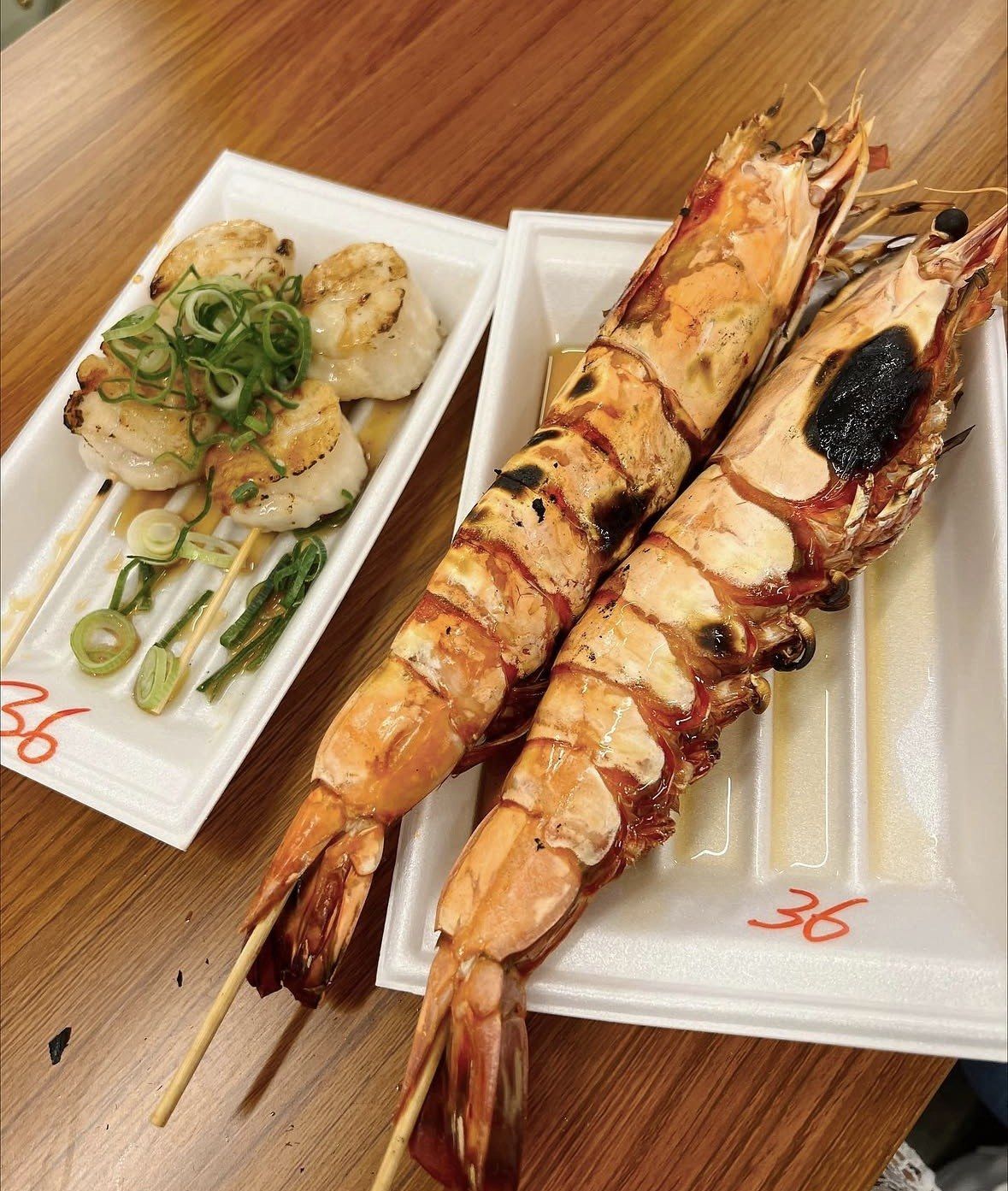
Split the arcade into two kinds of shop. The first kind cooks in front of you: scallops split and set over heat in the half shell, oysters opened to order, crab legs scored and grilled, beef skewers turned until the fat renders, tempura fried in batches and handed over hot. The second kind sells you something already finished, which is where the tuna counters, the uni trays, the fruit stands, the soy milk doughnut window and the pickle shops sit.
Portion discipline matters more here than on any street in Osaka. One grilled scallop and one plate of fatty tuna at the first two counters you pass will leave you full long before the 580 metres run out, so take a single item per shop, finish it where you bought it and walk on. Market snacks are small by design and the shops are built around that rhythm. A guided food tour in Osaka such as the 2-hour Kuromon walk keeps the same pace, with 5-6 samplings handed out along the way.
- Cooked to order, eat it hot at the shop: grilled scallops, oysters, crab legs, skewered wagyu, kushiyaki, tempura.
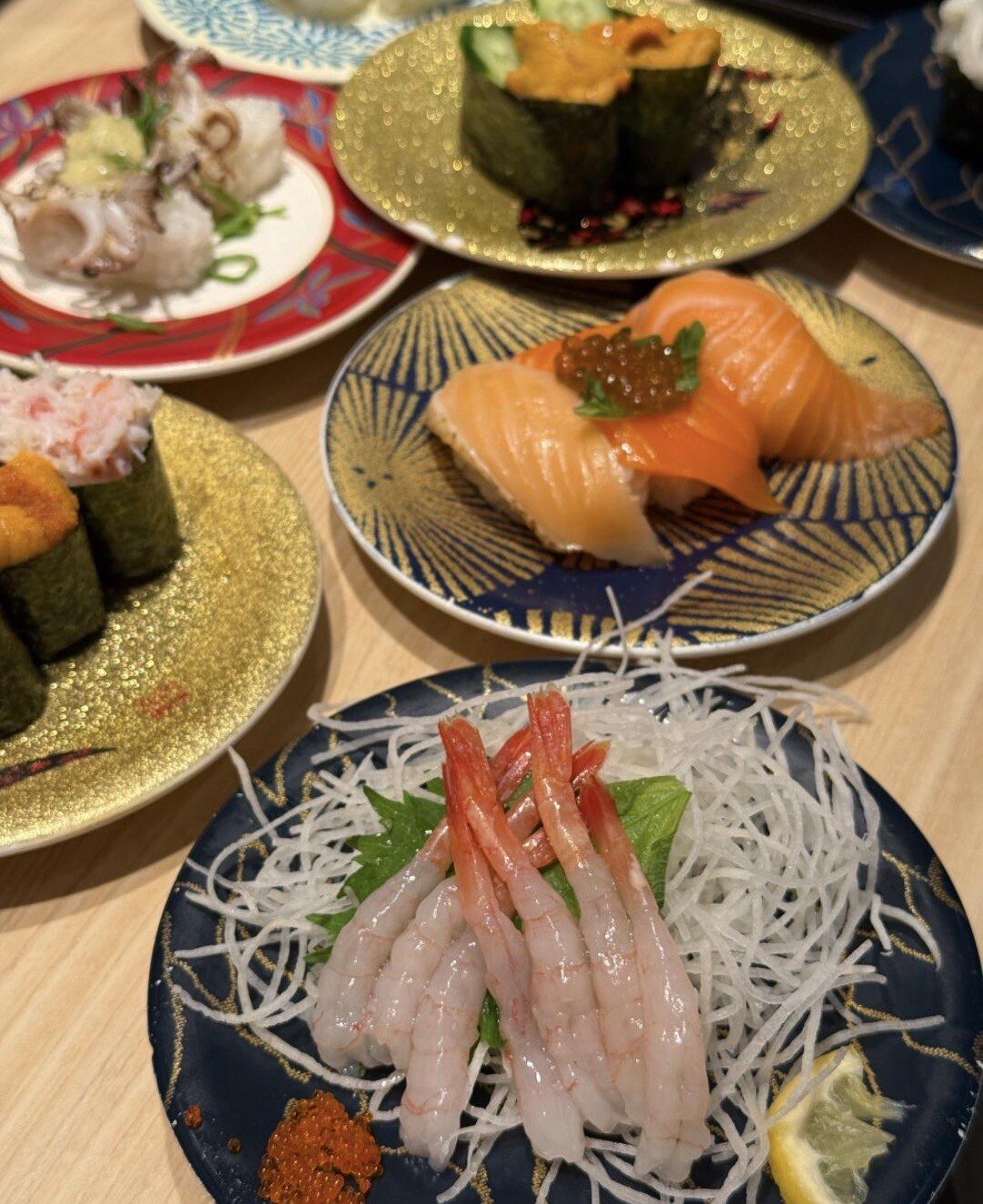
- Cut and handed straight over: tuna by the slice or the small plate, uni in trays, sashimi sets, sushi.
- Sold to take away: whole and cut fruit, strawberry and melon skewers, soy milk doughnuts, pickles in sealed packs, dried goods and tea.
- Sit-down food: sushi, seafood bowls over rice and tempura bowls at the market's eat-in corner.
Six stops in two morning hours
A 2-hour morning walk through the arcade with a certified guide, from $52 and rated 4.9 ★ (671 reviews), splits the eating across six stops so you still have an appetite at the last one.
★ 4.9/5 · 671 reviews
Kuromon Ichiba seafood: scallops, oysters, tuna, uni and crab
Seafood is the reason this arcade exists. Fish was traded here beside Enmyoji Temple in the Edo period and the place became an officially recognised market in 1902, and the counters still run on supply to kitchens as much as on visitors. The grill shops are the easy entry point: a scallop arrives in its shell with butter and soy bubbling at the edges, oysters come with lemon or ponzu, crab legs are cut open so you can get at the meat without tools.
Tuna is handled differently. Shops break down a loin behind the glass and sell the cuts by the piece or on small plates, so you can compare fatty otoro against leaner akami in one stop instead of committing to a full restaurant portion. Uni comes in small trays, sometimes with a mouthful of rice under it, and it is the one item worth eating standing at the shop rather than carrying anywhere.
Everything raw is a same-session purchase. Buy it, eat it there, and keep any longer shopping for the pickles and dried goods on the way out.
Skewered wagyu, tempura bowls and the eat-in corner
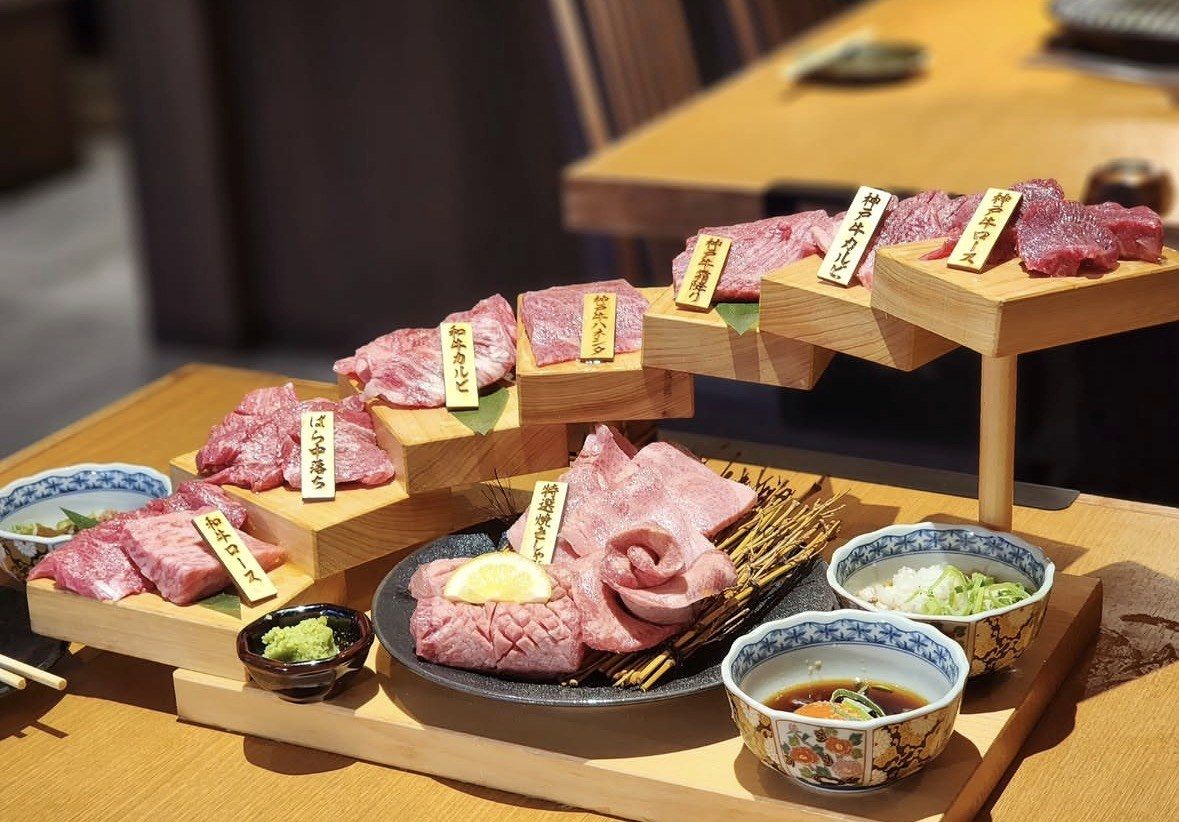
Beef skewers are the most reliable cooked-to-order item outside the shellfish grills. They go on the heat when you order, which means a short wait and a hot skewer rather than something that has been sitting under a lamp, and they pair well with a fruit stop afterwards because the sweetness resets your palate.
The tourism bureau's listing for the market notes an eat-in corner serving sushi, seafood bowls and tempura bowls, and that is where to go if you want a seated meal instead of a sequence of bites. Save it for the end of the visit. A rice bowl eaten early will fill you up before you reach the grills.
How ordering at the counters works
Ordering is pointing and counting. Most counters have the day's items laid out with the price card beside them, you indicate how many, and staff cook or plate it while you wait beside the shop. Bring cash for the arcade so nothing depends on which shop takes what, and hand over the money at the counter rather than at a till further inside.
Consumption tax is the part that catches first-timers. Food that leaves the shop is charged at the reduced 8% rate, while the same order eaten at the shop's seating is charged at 10%, which is why staff ask the question before they ring it up. Decide before you order, because once you sit down with the tray the answer is fixed.
Eat where you buy. The aisle is a working thoroughfare for deliveries and for people doing their actual shopping, and the official listings publish no arcade-wide rule, so the courtesy that holds is simple: use the crates, counter edge or stools the shop puts out, leave your skewers and shells in that shop's bin, and keep the walkway clear.
Why hours vary shop by shop, and when to arrive
There is no market-wide opening time. The official listing states that both hours and closing days are set by each individual shop, so a schedule built around one posted time will be wrong for a share of the roughly 150 businesses in the arcade. If one specific counter is the reason for your visit, the Kuromon Market Shopping District Promotion Association answers shop-level questions on 06-6631-0007, and it is worth a call on the day.
Morning is the slot. The tourism bureau tells summer visitors to come to Kuromon early and eat under the arcade before the day's heat builds, and the practical effect is the same in any season: more counters trading, more fish still being cut, less of the early-afternoon crush. Guided market walks leave at 10:00 or 11:00 for exactly that reason.
Getting there is the simple part of the day. The arcade begins at the exits of Nippombashi Station on the Osaka Metro Sennichimae Line, at 2-4-1 Nippombashi, Chuo-ku, which also puts the Dotonbori counters within an easy walk if you want the canal strip later.
How a guided tasting divides the stops
The problem with eating Kuromon on your own is arithmetic. Six counters look manageable until the second one hands you a full plate, and most people are finished somewhere around stall three. A paced walk solves that by buying small at each stop: the Kuromon Market Food Walking Tour runs 2 hours over six stops with five to six food samplings, a certified guide and tour photos afterwards, from $52 and rated 4.9 ★ (671 reviews), with 10:00 or 11:00 starts that match the bureau's morning advice. Come out of Exit 10 at Kintetsu Nippon-bashi Station and look for the guide by the SMBC ATM at Nippon-bashi 1chome; the first tasting follows a few minutes later.
Book that one if the market itself is the point and you want the counters explained while they are busy. If you also want the canal strip in the same outing, the 2.5-hour walk with a licensed guide links Dotonbori and Kuromon from the Apple Store Shinsaibashi, from $30 and rated 4.9 ★ (227 reviews), with all fees and taxes included and snacks not included, so your tastings stay your own choice. For a fixed list of dishes or a specific restriction, the 3-hour private walk builds 8 tastings around what you actually eat. Which morning starts are still open, and the conditions attached to them, sit on each tour's own booking page.
Either way, keep the market in the morning and save the izakaya (pub-style bars) for after dark.
| Tour | Duration | From price | Rating | Tastings and stops | Meeting point |
|---|
| Kuromon Market Food Walking Tour (6 stops, 6 tastes) | 2 hours | from $52 | 4.9 ★ (671) | 5-6 samplings at 6 stops | SMBC ATM, Nippon-bashi 1chome, Kintetsu Nippon-bashi Exit 10 |
|---|
| Osaka Walking Tour: Dotonbori, Kuromon Market & Street Food | 2.5 hours | from $30 | 4.9 ★ (227) | Licensed guide, snacks not included | In front of the Apple Store Shinsaibashi |
|---|
| Osaka Private Food Tours by Local Foodies: 100% Personalized | 3 hours | from $184 | 5.0 ★ (21) | 8 personalised tastings, sweet and savoury | Hotel pick-up on foot in central Osaka or a central Starbucks Coffee |
|---|
Questions people ask
Is Kuromon Market open on Sundays?
There is no single answer, because the official listing says each shop sets its own hours and closing days. Some counters trade when their neighbours are shut, so the arcade never fully switches off or on as a block. Plan a morning visit and accept that a few specific shops may be closed that day.
What can I buy to take back to the hotel or home?
Pickles in sealed packs, dried goods and tea travel best, and the fruit stands will sell you something cut and ready. Anything raw from the fish counters should be eaten in the arcade on the day you buy it. Soy milk doughnuts are a carry item too, though they are at their best within the hour.
Do I tip at the stalls or at the end of a market walk?
No. Tipping is not customary in Japan, including in Osaka restaurants, in taxis and on food tours, and thanks are said out loud instead. Keep your small change for the next counter.
How much time does the market need?
The arcade is about 580 metres long, so one straight pass is quick and the time goes on stopping. A guided tasting is built to 2 hours across six stops, which is a realistic figure for eating properly rather than walking through. If you are also doing Dotonbori the same day, the 2.5-hour walk covers both districts with commentary.
Is Kuromon a good first stop for a family?
It works well in the morning, when the aisle is less packed and the grill counters are visible at child height. Order one item per shop, eat it beside the counter, and use the eat-in corner for sushi, a seafood bowl or a tempura bowl when someone needs to sit down. The short 2-hour market walk suits an easier start to the day than a 3-hour evening tour.
Read also