In shortTsuruhashi Korea Town street food covers two adjoining areas east of central Osaka: the market lanes packed around Tsuruhashi Station, and Ikuno Koreatown on Miyuki-dori, a roughly 500-metre shopping street that opened in 1993 and now holds more than 100 eateries and shops, serving a community of about 30,000 residents of Korean descent. Tsuruhashi Station is where Kintetsu, the Osaka Metro Sennichimae Line and the JR Osaka Loop Line all stop, which is why the kimchi counters are reachable from almost any hotel in the city without a taxi.
about 500 mlength of Miyuki-dori, the main street
1993year the Koreatown street was opened
100+eateries and shops in Koreatown
about 30,000residents of Korean descent nearby
Two food areas that run into each other
You get off at Tsuruhashi, and the shops start before you are through the ticket gates. The lanes wrapped around the platforms are narrow and roofed in stretches, lined with counters selling pickles by the tub, dried goods, marinated meat for the grill and plates eaten standing up. Opening times in there are set shop by shop, the same arrangement as in the city's other market arcades, so check on the day instead of planning to the minute. If you compare Osaka food tours on this site, you will find that, apart from the cooking class in Noda, they run in Shinsekai, Dotonbori, Namba and Kuromon Ichiba rather than here, so Tsuruhashi makes a separate outing.
Miyuki-dori, over in Ikuno ward, is the Korean food street proper. The official spot page puts it at roughly 500 metres, dates its opening as a shopping street to 1993 and counts more than 100 eateries and shops along it, with about 30,000 residents of Korean descent living in the surrounding blocks. Those residents are why the grocers, butchers and side-dish counters are working hard on a Tuesday morning.
What to eat on a Tsuruhashi Korea Town street food walk
Two kinds of eating happen here: snacks handed over at a window, and long meals at a table. Graze along Miyuki-dori in daylight and keep the table for the end of the day, because an hour disappears inside the grilled meat houses.
Shopping is half of why people come out this far. The grocers are what fills the empty bag you brought from the centre, and the pickle counters will vacuum-pack if you ask.
- Kimchi, fermented napa cabbage with chilli, weighed out of open tubs, with radish and cucumber versions beside it and a long row of other side dishes.
- Grilled meat houses for the sit-down stretch, cuts cooked over the heat at your own table rather than arriving plated.
- Hotteok, a griddled pancake with sweet filling, passed over hot at a window and eaten within a few steps.
- Counter-window snacks sold by the piece, fried and skewered, which is most of what the walking eating amounts to.
- Grocery shops stacked with gochujang, chilli powder, rice cakes, noodles and dried seafood, and butchers cutting to order for the grill.
Ask for the Korean streets
A 3-hour private walk with 8 tastings and a personalisation form sent after booking, so the kimchi counters and grilled meat houses east of the centre are what the route gets built around.
★ 5.0/5 · 21 reviews
Getting to Tsuruhashi Market in Osaka
Three services stop at the same station. The official spot page lists the Tsuruhashi and Koreatown food area as served by Tsuruhashi Station on Kintetsu, the Osaka Metro Sennichimae Line and the JR Osaka Loop Line, which makes it one of the easier outlying districts to reach from almost anywhere in the city.
The other way in is Momodani, further round the JR Osaka Loop Line, with a 10-minute walk at the end of it. Use that when Miyuki-dori is the whole plan; come via Tsuruhashi when you want the station lanes as well.
For a day of Metro hopping, the Enjoy Eco Card gives unlimited rides on all Osaka Metro lines and Osaka City Bus routes: 820 yen on weekdays, 620 yen on Saturdays, Sundays and holidays, 310 yen for a child, plus same-day discounts at about 20 tourist facilities. It covers Metro and city buses only, so arriving on the JR Loop Line falls outside it.
Where Koreatown fits on a second or third day
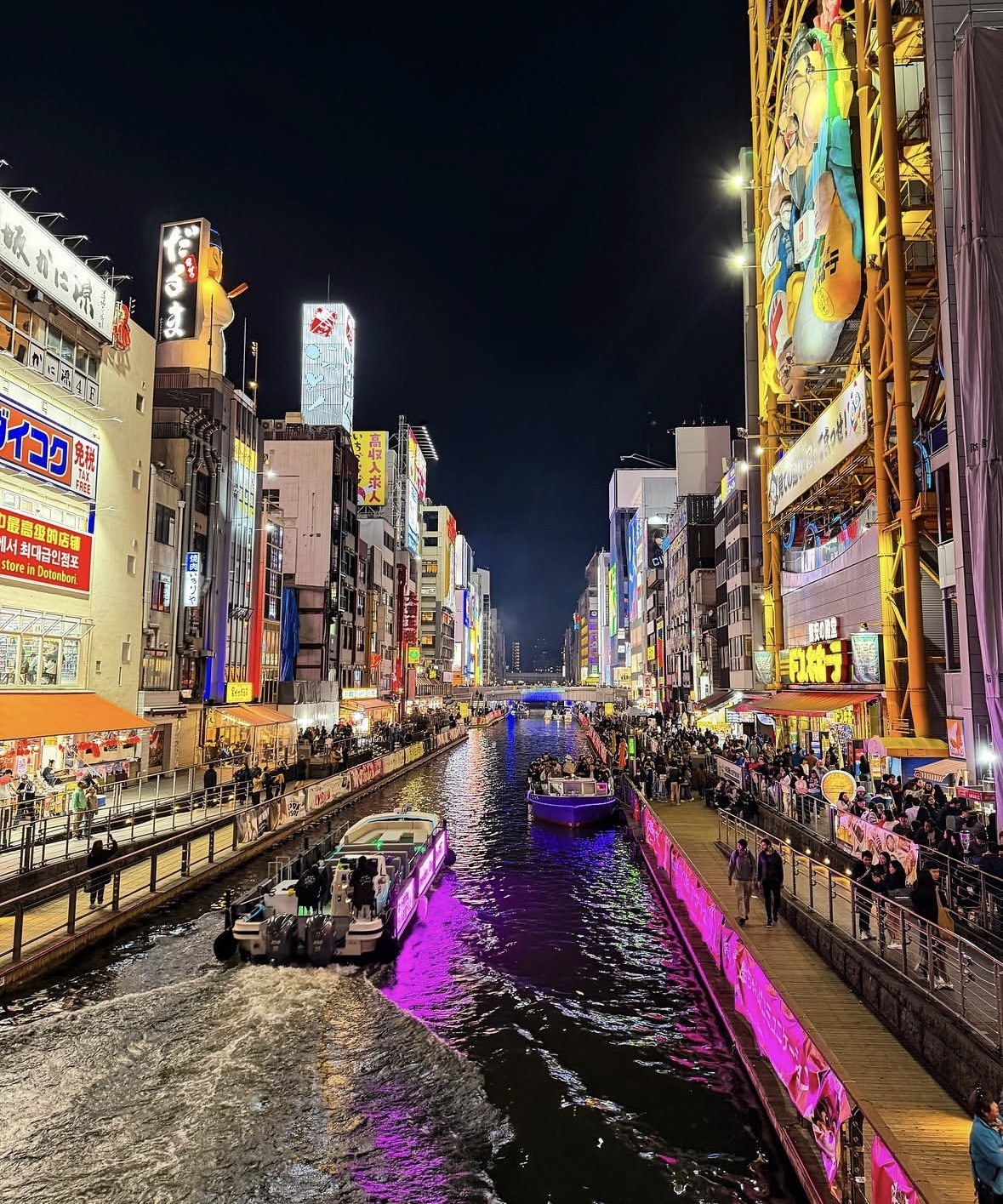
A first trip to Osaka belongs in Dotonbori and Shinsekai. The canal strip is immediately outside Namba Station, with the busiest run of counters 5 to 10 minutes on foot from Namba, Shinsaibashi or Nipponbashi, and Shinsekai's Janjan Yokocho packs about 50 kushikatsu and doteyaki shops, skewers deep-fried to order and beef stewed in miso, into roughly 130 metres of lane. Keep the Korean streets for day two or three, once you have seen the water and the signs.
The ride out takes very little. Tsuruhashi sits on the same Osaka Metro Sennichimae Line that serves Nippombashi for Kuromon Ichiba, so you can walk the 580-metre arcade in the morning, which is what the tourism bureau advises in summer, and still be east of the centre afterwards without a change of plan. On the JR Osaka Loop Line, Tsuruhashi and Momodani sit on the circuit that runs up to Tenma, where hundreds of izakaya, small places serving drinks and plates to share, fill the alleys beside the 2.6 km Tenjinbashisuji arcade.
The Korean food here is daytime and early-evening eating, while the central strips hold the late hours. Run it as Dotonbori and Shinsekai after dark on arrival day, Kuromon under its roof the next morning, then Tsuruhashi and Ikuno in daylight.
| Street or arcade | Length | Shops | Station |
|---|
| Ikuno Koreatown, Miyuki-dori | about 500 m | more than 100 eateries and shops | Tsuruhashi, or 10 min walk from Momodani |
|---|
| Kuromon Ichiba, Nipponbashi | about 580 m | roughly 150 shops | Outside Nippombashi, Sennichimae Line |
|---|
| Janjan Yokocho, Shinsekai | about 130 m | about 50 shops | Dobutsuen-mae |
|---|
| Hozenji Yokocho, off Dotonbori | 80 m long, 3 m wide | kappo, bars, okonomiyaki, kushikatsu | Namba, 5 min walk |
|---|
| Tenjinbashisuji | about 2.6 km | about 800 stores on the spot page | Minamimorimachi or Osakatemmangu for 1-3 chome |
|---|
Putting the Korean streets on a private walk
None of the shared walks on this site gathers in Tsuruhashi. The 18-foods street tour stays on the other side of the city, its guide waiting at street level outside MEGA Don Quijote Shinsekai by Dobutsuen-mae Exit 5, and the 3 hours that follow cover 18 Japanese local foods, 3 drinks alcoholic or not, and 4 local restaurants, from $80, rated 5.0 ★ (3,950 reviews). Take it for a first evening, when staying in the central quarters is the point.
On the private walk the district is yours to choose. It runs 3 hours with 8 tastings balanced between sweet and savoury, from $184, rated 5.0 ★ (21 reviews), and after booking you get an online personalisation form plus direct communication with your host for itinerary planning and local recommendations. Name Tsuruhashi and Ikuno Koreatown there, and say which half you want: pickle and side-dish shopping, a long sit-down at a grill, or snacks from the windows.
Hotel pick-up on foot can be arranged for centrally located Osaka hotels, or you meet your host at the central Starbucks Coffee meeting point. No vehicle is included, so the day runs on trains and on foot. Dietary limits go on the same form, which matters in a district built on grilled meat; on the shared 18-foods walk, vegetarian requests, allergies and dislikes can be accommodated only in part and the number of tastings drops, while strict gluten-free is beyond what that walk can do. Which dates are open for an east-side route, and the conditions attached to them, are set out on the booking page.
Rules that apply the moment you start eating
Carry cash, and expect to be asked about seating. Consumption tax is the reduced 8% on food you take away and 10% if you use the shop's own seats, which is why staff ask before ringing up an order, and over a morning of small purchases it adds up.
Lighting a cigarette in a market lane is not an option here. The ban on street smoking has applied to every part of Osaka City, Ikuno and Tsuruhashi included, since 27 January 2025, the penalty is a 1,000 yen fine, and the only lawful spot is inside a designated smoking area; indoors, restaurants and cafes are still allowed separated smoking sections. Tipping is not customary in Japan, on a food walk or at a restaurant table, and thanks are said out loud instead.
Questions people ask
Does the Koreatown street have set opening hours?
No district-wide hours are published for it. Osaka's market streets work the way Kuromon Ichiba and Dotonbori do, where the official listings state that opening times and closing days are fixed by each individual shop. Daylight is the dependable window for the grocers, pickle counters and snack windows, so phone ahead if one particular restaurant is the reason you are heading east.
Is summer a bad time to walk Miyuki-dori?
August is hard going on foot anywhere in the city, with a monthly mean of 29.0C and a normal daily maximum of 33.7C. The tourism bureau's summer advice for the covered Kuromon arcade is to come in the morning before the heat builds, and a 500-metre shopping street deserves the same treatment. On the numbers April is the comfortable month, with humidity at its lowest at 58%.
Can a private food walk be built around Korean food?
That is what the personalisation form is for. The private walk runs 3 hours with 8 tastings, from $184, rated 5.0 ★ (21 reviews), and the listing includes direct contact with your host for itinerary planning and local recommendations before the day. Write the district and the dishes down early, because no vehicle is included and the route has to work on trains and on foot.
Can I combine Koreatown with Kuromon Market in one day?
Yes, and the Sennichimae Line makes it easy. Kuromon Ichiba sits immediately outside Nippombashi Station at 2-4-1 Nippombashi, and Tsuruhashi is on the same line. Do the 580-metre arcade and its eat-in corner in the morning, as the bureau suggests for summer, then head east. If one Kuromon stall is the reason for the detour, the Kuromon Market Shopping District Promotion Association takes shop-level questions on 06-6631-0007.
Which dates are busiest for eating out in Osaka?
The national holidays do most of the crowding: 29 April, then 3, 4 and 5 May. On 24 and 25 July the city gives itself over to Tenjin Matsuri, the river procession and the fireworks falling on the 25th. Mid-September adds holiday runs around Respect for the Aged Day and the autumn equinox, and Imamiya Ebisu Shrine's Toka Ebisu runs on 9, 10 and 11 January.
Read also